Tesla Stock Overvalued? Analysts Question Musk’s Narrative
By Varun Mittal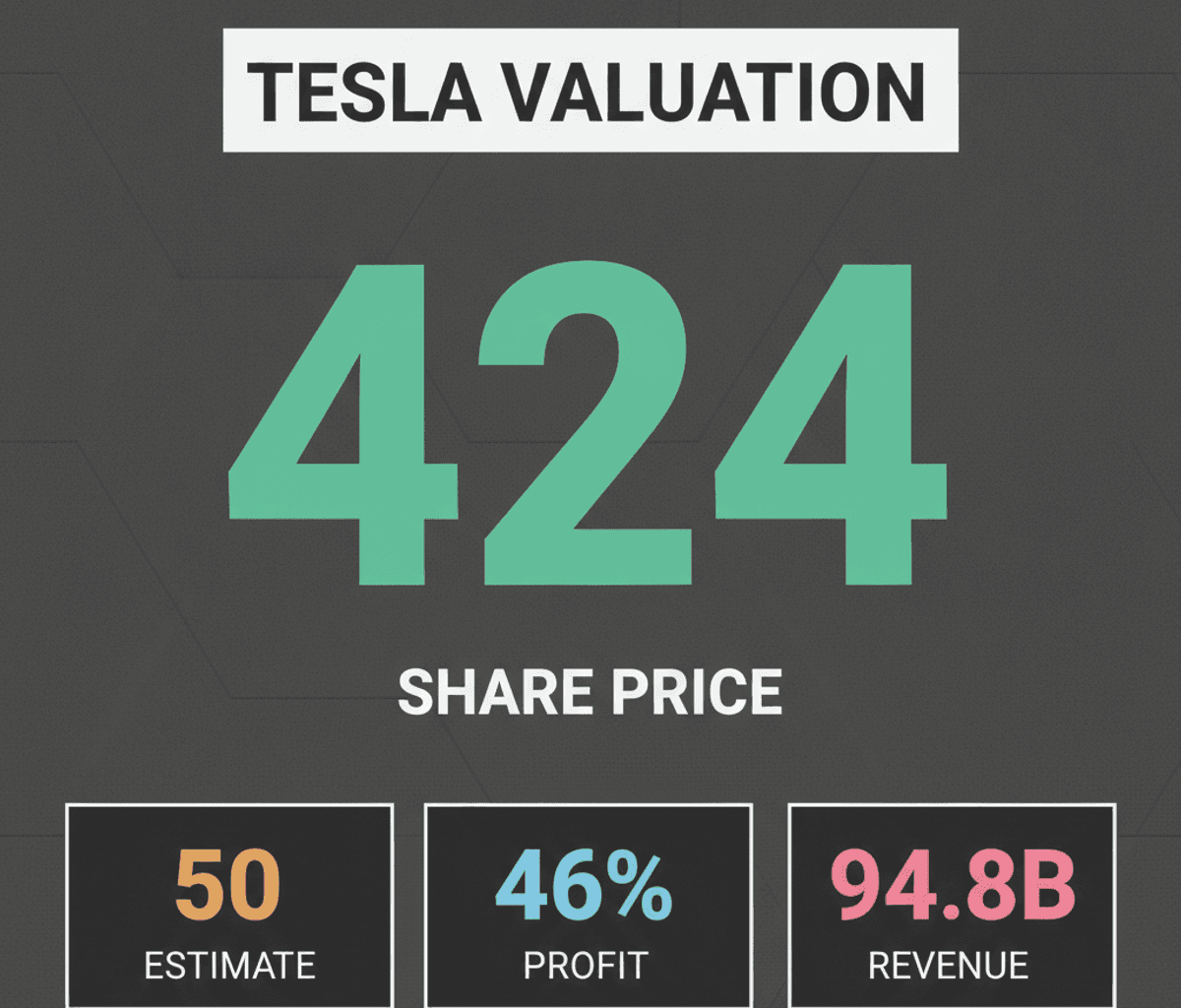
Analysts, including Michael Burry, call Tesla ‘ridiculously overvalued’ as Elon Musk shifts focus from EVs to AI amid declining sales and missed targets.
Financial analysts, including Michael Burry and David Trainer, contend that Tesla is “ridiculously overvalued.” They argue Elon Musk continuously redefines the company’s identity to sustain its elevated market valuation, often shifting its narrative from an electric carmaker to an AI giant.
Tesla’s Financial Headwinds
Despite Musk’s narrative prowess, Tesla faces significant financial challenges:
- Sales fell for a second consecutive year in 2025, with total revenue down 3% to $94.827 billion.
- Profit plummeted 46% to $3.794 billion in 2025.
- Vehicle deliveries in Q1 2026 fell short of investor expectations, despite a 6% revenue improvement.
- The company has had a three-year hiatus in launching new models, with the latest, the Cybertruck, facing regulatory hurdles in regions like Europe.
- The U.S. State Department spent $400 million on Cybertrucks, while SpaceX purchased 17% of production for $131 million to mitigate accumulating inventory.
David Trainer of New Constructs estimates Tesla’s shares should be worth no more than $50, far below their current trading price of $424, suggesting the market implies Tesla will become the world’s largest automaker despite losing market share.
Musk’s AI & Robotaxi Narrative
Nobel laureate Robert Shiller’s “Narrative Economics” theory suggests shared stories about a company’s future can sway its valuation more than tangible data. Elon Musk is portrayed as a master of this, skillfully crafting narratives to maintain investor confidence.
After losing its lead in electric vehicle manufacturing to China’s BYD in 2025, Musk pivoted Tesla’s identity. He now proposes it as an artificial intelligence company, promising 100% autonomous robotaxis and humanoid robots (Optimus) by 2027.
Reality Check on Autonomy & Robotics
These ambitious visions face significant real-world challenges. Despite Musk’s claims of 100% autonomous driving since 2015, most Tesla vehicles operate at Level 2 autonomy, requiring constant human supervision.
Experts note that while Level 4 autonomy exists, Level 5 (fully automated) remains elusive. In the robotaxi sector, Google-affiliated Waymo is considerably more advanced than Tesla in both vehicle numbers and regulatory approvals.
Similarly, domestic robots are currently human-controlled and limited. While Boston Dynamics’ Atlas leads in humanoid robotics, it is confined to industrial settings due to the complexities of domestic interactions, highlighting the gap between vision and current capability.