Tesla’s India Entry Struggles: Just 486 EVs Sold
By Business Desk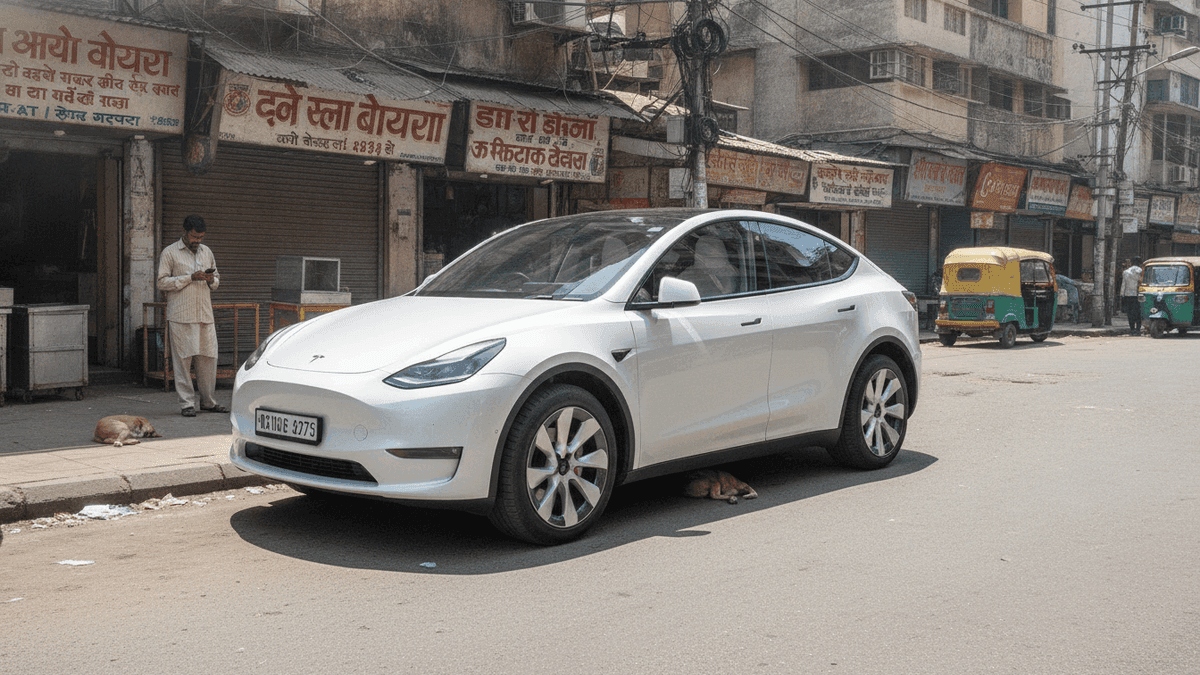
Tesla’s first year in India sees a disappointing 486 EV sales, challenged by high import duties and limited models. A tough start for the EV giant.
🔥 Main Takeaway
Tesla’s inaugural year in India was a major miss, with only 486 EVs sold, highlighting how high import duties and a limited product lineup are crushing its market entry.
📌 What Happened?
Tesla recorded sales of just 486 vehicles in the Indian market since its official launch in July 2025.
The company initiated operations with an Experience Centre in Mumbai, introducing only the imported Model Y SUV.
Its strategy relied on importing Completely Built Units (CBUs), which resulted in premium pricing due to steep import duties.
This performance significantly lags behind established luxury EV competitors such as BMW, Mercedes-Benz, Volvo, and BYD.
💰 Why It Matters
This signals a crucial lesson for global EV giants: local market adaptation, not just brand power, dictates success in India.
High import taxes and the absence of local assembly make Tesla’s offerings too expensive for even the premium segment of the Indian EV market.
Competitors benefiting from broader product portfolios and local manufacturing, including domestic players like Tata Motors and Mahindra, gain a critical pricing and accessibility edge.
Tesla’s restricted retail and service network across the country presents a significant barrier for potential buyers, impacting consumer confidence and market penetration.
👀 What to Watch Next
Will Tesla pivot its strategy to consider local assembly or manufacturing in India to reduce costs and leverage government incentives?
Look for potential expansion of its physical presence or the introduction of additional vehicle models beyond the Model Y to diversify its offerings.
The competitive Indian premium EV market demands adaptability; Tesla’s future moves will determine if it can seriously challenge its growing list of rivals.