Tata Motors EV Bookings Surge 2.5x Amidst Fuel Price Hikes
By Sivam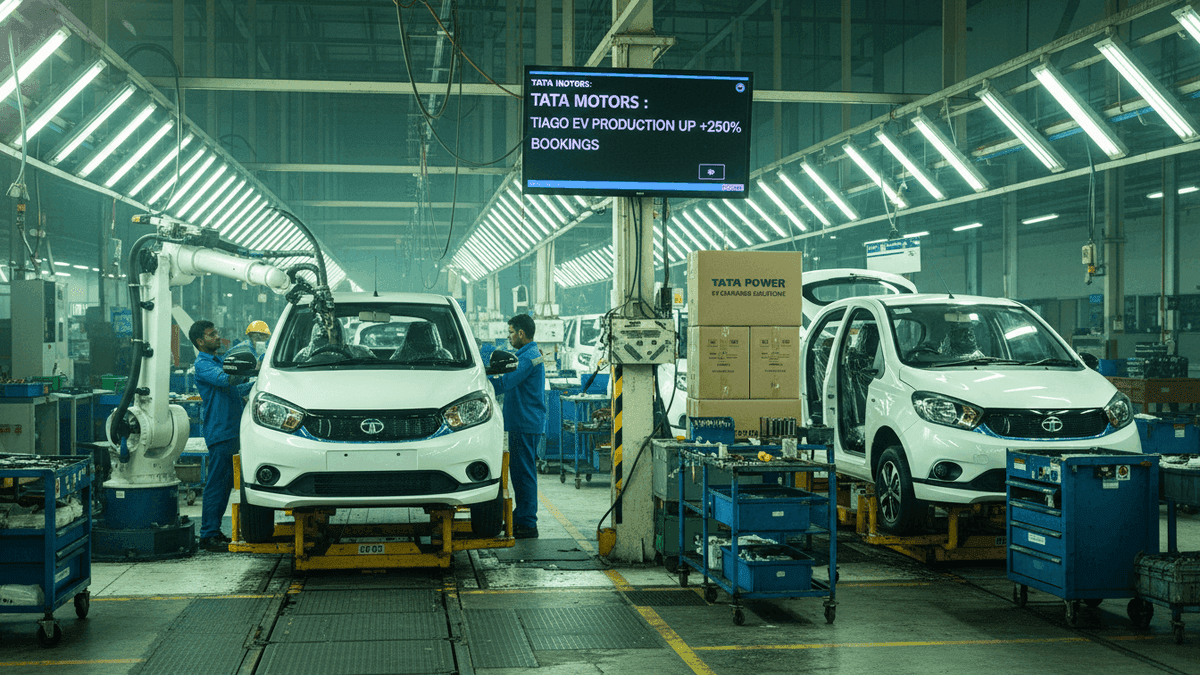
Tata Motors experiences a 2.5x surge in EV bookings, driven by rising fuel costs. The Tiago EV emerges as a financially smart choice for consumers.
In a notable shift reflecting evolving consumer priorities, Tata Motors has announced a substantial 2.5-fold increase in electric vehicle (EV) bookings. This surge is directly attributed to the persistent rise in fuel prices, which is compelling buyers to reconsider their automotive choices and gravitate towards more cost-effective and sustainable transportation solutions. The company is strategically leveraging this market dynamic by positioning its new Tiago EV as a particularly attractive investment, emphasizing its long-term financial benefits for consumers.
The current economic landscape, marked by volatile energy costs, has significantly impacted consumer purchasing behavior across the automotive sector. For Tata Motors, this environment has translated into a tangible acceleration in demand for its electric vehicle portfolio. The 2.5 times increase in bookings underscores a growing awareness among consumers regarding the operational savings offered by EVs, presenting a compelling alternative to traditional internal combustion engine vehicles.
Rising Fuel Costs Drive Electric Vehicle Adoption
The core catalyst for Tata Motors’ recent booking surge is the sustained escalation of fuel prices. As petrol and diesel costs continue to climb, the economic viability of owning and operating conventional vehicles diminishes for many households and businesses. This financial pressure point is actively pushing a segment of the market towards electric alternatives, where ‘fuel’ costs are considerably lower dueax. The data from Tata Motors serves as a clear indicator of how external economic factors, specifically energy prices, are directly influencing the pace of EV adoption in the market.
This trend highlights a crucial pivot in consumer decision-making, where the initial purchase price of an EV is increasingly being weighed against its total cost of ownership, particularly in the context of daily running expenses. The immediate and tangible savings on fuel are proving to be a powerful incentive, accelerating the transition to electric mobility much faster than anticipated in previous market cycles. Tata Motors is effectively capitalizing on this immediate economic advantage presented by its EV offerings.
Tata Motors’ Strategic Positioning of the Tiago EV
Central to Tata Motors’ current success in the EV segment is the strategic positioning of its new Tiago EV. The company is actively promoting this model not merely as an environmentally friendly option, but as a financially prudent long-term investment. A key aspect of this proposition is the promise of cost recovery within an estimated timeframe of four to five years. This projection aims to alleviate initial concerns about the higher upfront cost often associated with electric vehicles by demonstrating a clear path to recouping that investment through operational savings.
Further enhancing the Tiago EV’s appeal, Tata Motors has introduced a segment-first lifetime battery warranty. This move directly addresses one of the most significant anxieties among potential EV buyers: the longevity and replacement cost of the battery pack. By offering such an extensive warranty, Tata Motors is providing an unparalleled level of assurance, significantly reducing perceived long-term ownership risks and bolstering consumer confidence in the durability and reliability of its electric offerings. This warranty is a critical differentiator in a highly competitive market.
Market Shift and Long-Term Financial Viability of EVs
The substantial shift in buyer preference observed by Tata Motors is indicative of a broader market transformation. Consumers are increasingly evaluating vehicles based on a more holistic understanding of their financial implications over the entire ownership period. The initial investment in an electric vehicle, while potentially higher than a comparable internal combustion engine model, is being offset by lower running costs, reduced maintenance, and now, the explicit promise of financial recovery within a defined timeframe.
This emphasis on long-term financial viability is reshaping the automotive purchase landscape. As more data emerges regarding the actual savings achieved by EV owners, the momentum towards electric vehicles is expected to strengthen further. Tata Motors’ proactive communication of these financial benefits, coupled with robust product offerings like the Tiago EV and its innovative warranty, places the company in a strong position to lead this transition and capture a larger share of the evolving automotive market.
Outlook: Sustained Growth in Electric Mobility
The current surge in EV bookings for Tata Motors, propelled by external economic pressures like rising fuel prices, suggests a robust and sustained growth trajectory for electric mobility. The company’s strategy of combining accessible EV models with strong financial incentives and comprehensive warranty programs is proving effective in converting interest into actual sales. As the infrastructure for electric vehicles continues to expand and battery technology advances, the economic advantages of EVs are likely to become even more pronounced.
This trend not only reinforces Tata Motors’ leadership in India’s burgeoning EV market but also signals a significant shift in the broader automotive industry. Manufacturers that can effectively articulate and deliver on the long-term value proposition of electric vehicles, addressing both environmental concerns and financial practicality, are poised for considerable success. The emphasis on cost recovery and battery assurance by Tata Motors sets a precedent for how future EV adoption can be accelerated through consumer-centric product development and marketing strategies.