Tamil Nadu Shifts to GCC Model for Electric Buses, Redefining Public Transport Structure
By Varun Mittal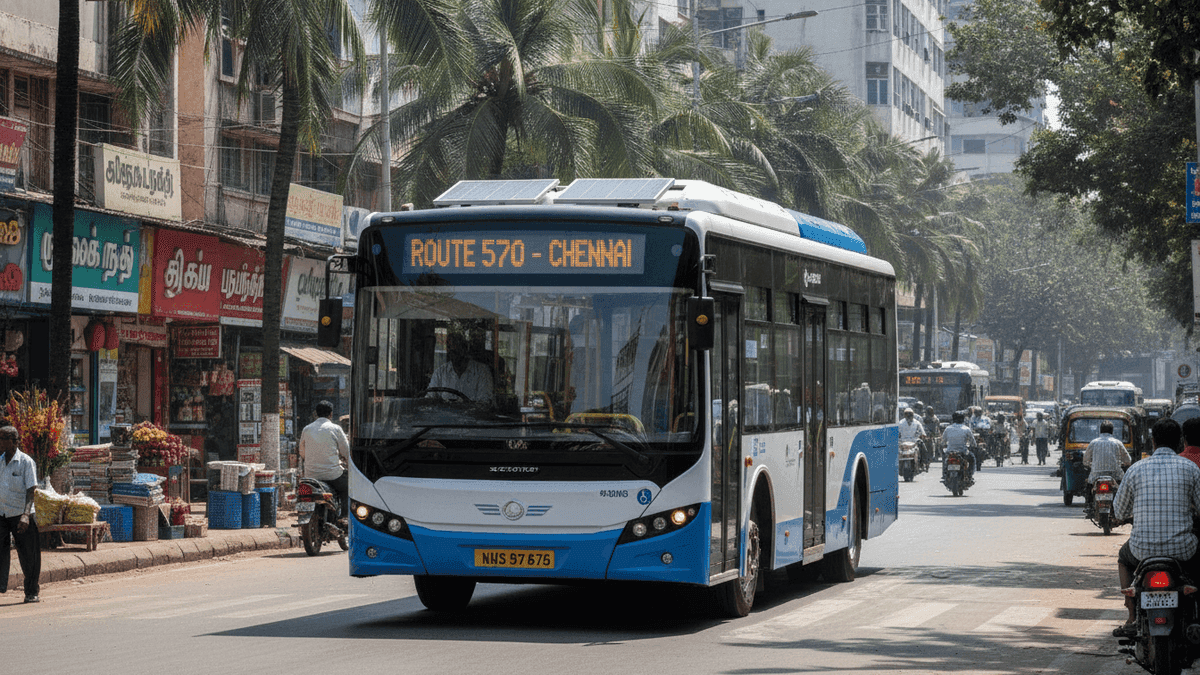
Tamil Nadu’s adoption of the Gross Cost Contract model for 500 electric buses signals a structural shift in public transport financing and operations.
The Tamil Nadu government is initiating a significant structural shift in its urban public transport strategy, moving to deploy 500 new electric buses across Chennai, Madurai, and Coimbatore under a Gross Cost Contract (GCC) model. This decision follows the cancellation of a prior procurement tender, a move approved by the German funding agency KfW on June 18, after the transport department sought to withdraw the 2024 tender in March.
Under the new GCC framework, private concessionaires assume comprehensive responsibility. They will procure, own, operate, and maintain the electric bus fleet, including hiring all necessary staff and managing fare collection. In return, these private operators will share a pre-determined portion of their daily revenue with the state transport corporations. This mechanism is designed to substantially alleviate the financial strain on public entities by externalizing major capital expenditures and operational costs, such as vehicle acquisition, ongoing maintenance, fuel, and employee salaries.
This contracting approach is not an entirely novel concept within the region; the Metropolitan Transport Corporation (MTC) already utilizes similar GCC arrangements for over 600 of its existing buses. Data from these contracts indicates operational costs for non-air-conditioned electric buses stand at approximately Rs 77 per kilometre, while air-conditioned counterparts cost around Rs 81 per kilometre. The MTC concurrently plans further expansion, preparing four distinct tenders for 20 double-decker air-conditioned electric buses, 1,300 standard air-conditioned electric buses, and 220 smaller air-conditioned buses, targeting enhanced last-mile connectivity in Chennai.
However, this structural pivot towards greater private involvement has drawn sharp criticism from employee unions. K. Arumuganainar, general secretary of the CITU-affiliated Tamil Nadu State Transport Employees Federation, characterizes the policy as a gradual privatization of public transport. He argues that state transport corporations should retain direct control over bus procurement and operation, warning that an increasing reliance on private concessionaires could ultimately erode the financial stability of public transport undertakings, drawing parallels to similar shifts observed within the power sector.
The move towards the GCC model also occurs amidst existing operational challenges for public transport. For instance, the MTC faced scrutiny for reducing its bus services in Chennai, with 162 scheduled services reportedly cancelled on a single Tuesday. While officials attributed these cuts to administrative reasons, employees cited shortages of drivers, conductors, and essential spare parts as the root cause, against a backdrop of MTC operating 3,858 scheduled services daily across 686 routes. Such operational pressures may inform the strategic re-evaluation of financial models.
The shift to the Gross Cost Contract model represents a fundamental re-architecture of how public transport services are financed and delivered in Tamil Nadu. It highlights a recurring pattern in public service provision where governments seek to leverage private capital and operational efficiencies to manage escalating costs and improve service delivery, while simultaneously navigating concerns regarding public ownership, worker rights, and potential long-term financial implications for state-owned enterprises. This structural negotiation between fiscal relief and public sector integrity remains a critical policy challenge.