Sensex Drops 443 Points Amidst Oil Spike: Impact on Your Investments
By Business Desk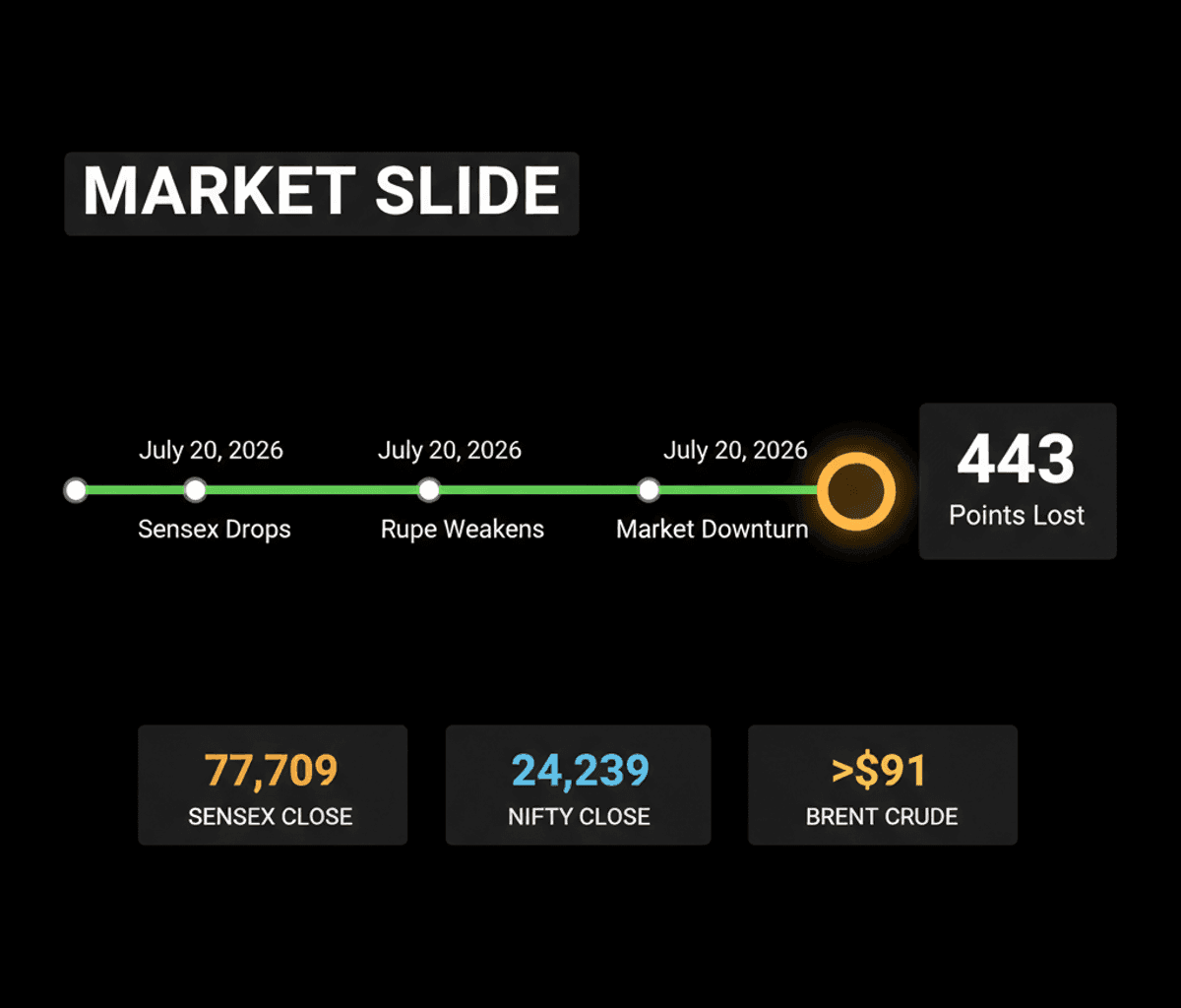
Indian markets tumbled on July 20, 2026, with Sensex down 443 points due to rising oil prices. Understand how this affects your equity and debt funds.
THE PIP (TL;DR)
Why it matters to you: Rising crude oil prices and global uncertainty can directly impact your equity and debt investments, causing short-term dips.
- On Monday, July 20, 2026, the Sensex dropped 443 points (0.6%) to 77,709, and the Nifty declined 96 points (0.4%) to 24,239.
- This market downturn was primarily driven by fluctuating crude oil prices and a general global risk-off sentiment among investors.
- Your large-cap equity funds likely saw a slight dip, and the weakening rupee could affect investments with international exposure.
Indian equity markets experienced a notable downturn on Monday, July 20, 2026, as the Sensex shed 443 points, closing at 77,709. Similarly, the Nifty 50 recorded a 96-point drop, settling at 24,239 by the end of the trading day. The Indian rupee also weakened against the dollar, trading at 96.45 compared to its previous close of 96.28.
This market slide was largely attributed to the volatility in crude oil prices and a cautious global investment mood. Brent crude, a key international benchmark, briefly surged past $91 per barrel during the day, fueled by escalating geopolitical tensions between the US and Iran. Such global events often trigger investors to move towards safer assets, impacting emerging markets like India.
Banking stocks, including major players like Axis Bank, HDFC Bank, and Kotak Mahindra Bank, led the decline in the domestic market. These financial institutions faced selling pressure following a mix of quarterly earnings reports and investor reactions. Additionally, Maruti Suzuki India saw its shares fall by 2.2%, contributing to the broader market weakness.
For your personal finances, a dip in the broader market indices like the Sensex and Nifty often translates to a temporary decline in the Net Asset Value (NAV) of your equity mutual funds, particularly those heavily invested in large-cap stocks. While short-term fluctuations are normal, continued geopolitical tensions in West Asia could sustain market volatility, making it important to monitor your portfolio’s performance.
ONE THING TO CONSIDER TODAY
Now might be a good time to review your portfolio’s diversification across different asset classes and geographies to understand how global events might affect your long-term investment goals.