Ola Electric Stock Dips 5.7% Despite Reduced Q4 Loss
By Sivam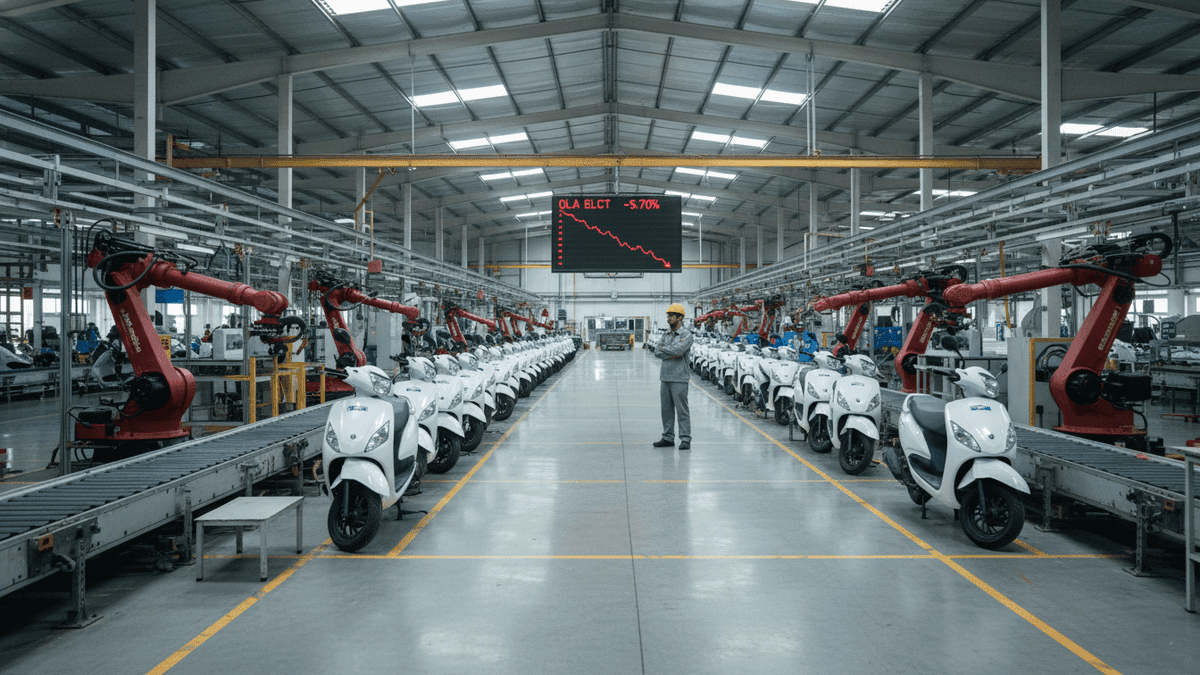
Ola Electric shares fell 5.7% to ₹34.8 despite a 43% reduction in Q4 FY26 net loss, as brokerages maintain bearish outlooks.
Ola Electric Stock Suffers Sharp Decline as Bearish Sentiment Persists
Shares of electric vehicle manufacturer Ola Electric encountered a notable downturn, falling as much as 5.7% to an intraday low of ₹34.8 on the Bombay Stock Exchange (BSE) today. This significant drop underscores persistent investor caution, fueled by bearish commentary from financial brokerages following the company’s fourth-quarter financial results. Despite reporting a reduction in its net loss, the market reaction was predominantly negative, highlighting underlying concerns about the company’s financial health and future prospects.
Later in the trading session, the stock managed to recover some of its earlier losses but remained in negative territory, trading 3.7% lower at ₹35.5 by 11:47 IST. The company’s market capitalization at that point stood at approximately ₹15,684.9 crore, equivalent to about $1.6 billion. Year-to-date, Ola Electric’s shares have seen a decline of over 6% in 2026, and over the past year, the stock has depreciated by a substantial 31%, indicating a challenging period for the company’s market valuation.
Q4 FY26 Financial Performance Shows Reduced Net Loss but Declining Revenue
The recent slide in Ola Electric’s stock price occurred even as the company announced a 43% year-on-year decrease in its consolidated net loss for the fourth quarter of fiscal year 2026, bringing it down to ₹500 crore from ₹870 crore in the corresponding period of the previous year. However, on a sequential basis, the net loss saw a slight increase of 3%, widening from ₹487 crore in the third quarter. This mixed financial picture, with a lower net loss but a sequential increase, likely contributed to the cautious investor response.
Operating revenue experienced a significant contraction, plunging 57% year-on-year and 44% quarter-on-quarter to ₹265 crore during Q4 FY26. When including other income of ₹39 crore, the total income for the quarter amounted to ₹304 crore. The primary driver of this revenue decline was the automotive business, which saw its revenue fall by approximately 57% year-on-year to ₹264 crore. Revenue from the company’s cell business remained relatively flat at ₹4 crore, indicating limited contribution from this segment during the quarter.
Electric Two-Wheeler Deliveries Shrink, Impacting Automotive Revenue
The substantial decline in automotive revenue is directly linked to a sharp contraction in electric two-wheeler deliveries. During the fourth quarter of fiscal year 2026, Ola Electric’s electric two-wheeler deliveries decreased by about 61% year-on-year, totaling 20,256 units. This significant drop in sales volume placed considerable pressure on the company’s top line and overall financial performance for the period.
Ola Electric acknowledged that Q4 FY26 was a low-volume quarter but highlighted a significant reduction in its cash burn. Total expenses were reduced by 57% year-on-year to ₹546 crore. This cost-control measure helped the company achieve its first operating cash flow positive quarter, reporting a consolidated CFO of ₹91 crore. Furthermore, the company reported that its customer service operations have “materially stabilised,” with the average service turnaround time improving dramatically from around nine days in October 2025 to nearly one day by March 2026, indicating operational efficiencies being implemented.
Auditors Raise Concerns Over Cash Flows While QIP Discussions Continue
Despite the reported operational improvements and a reduction in net loss, Ola Electric’s auditors raised concerns regarding the company’s cash flows and funding position. In their report for FY26, the auditors noted negative operating cash flows of ₹775 crore. They further stated that the company’s ability to continue as a going concern relies on existing cash reserves, anticipated improvements in operations, the utilization of credit lines, and ongoing discussions with investors to secure additional funding.
The auditors also pointed out that Ola Electric has made substantial progress in its engagement with investors for a proposed ₹1,500 crore Qualified Institutional Placement (QIP). This fundraising initiative is expected to provide crucial liquidity and bolster the company’s working capital, addressing some of the concerns raised about its financial stability. The successful completion of this QIP will be critical for Ola Electric’s short-to-medium term financial health.
Brokerages Remain Cautious, Issuing ‘Sell’ Ratings
Even with the positive steps taken towards operational efficiency and cost reduction, financial brokerages have largely maintained a bearish stance on Ola Electric. Emkay Global Financial Services reiterated its ‘Sell’ rating on the stock, although it raised its target price from ₹20 to ₹25, citing stronger industry growth assumptions. This slight upward revision in target price did not alter the fundamental ‘Sell’ recommendation.
Similarly, Citigroup maintained its ‘Sell’ call on Ola Electric, increasing its target price from ₹22 to ₹26. The consistent ‘Sell’ ratings from multiple financial institutions reflect ongoing concerns among analysts regarding the company’s valuation, competitive landscape, and path to sustained profitability. HSBC also retained its ‘Reduce’ rating, though it lowered its target price from ₹45 to ₹33, suggesting a potential downside of up to 32% from the current trading levels, further reinforcing the cautious outlook from the brokerage community.
Outlook for FY27: Focus on Volume Recovery and Profitability
Looking ahead to fiscal year 2027, Ola Electric aims to regain momentum by focusing on several key strategic priorities. The company anticipates a significant sequential increase in orders for Q1 FY27, projecting nearly double the volume to around 45,000 units. This expected surge in demand, following a 20% month-on-month rise in registrations in April and a doubling in March, is projected to move its automotive business towards EBITDA and free cash flow positivity within FY27.
However, Ola Electric cautioned that profit margins might remain moderate over the next two quarters. This is attributed to factors such as ongoing commodity inflation and the need for pricing investments to stimulate growth and capture market share. The company’s strategic roadmap for FY27 includes recovering vehicle volumes, enhancing customer service, driving cost reductions, scaling up its Gigafactory operations, and increasing the utilization of its in-house manufactured battery cells. These initiatives are crucial for achieving long-term financial sustainability and market leadership in the competitive EV sector.