Ola Electric Secures ₹780 Cr QIP for EV Growth
By Sivam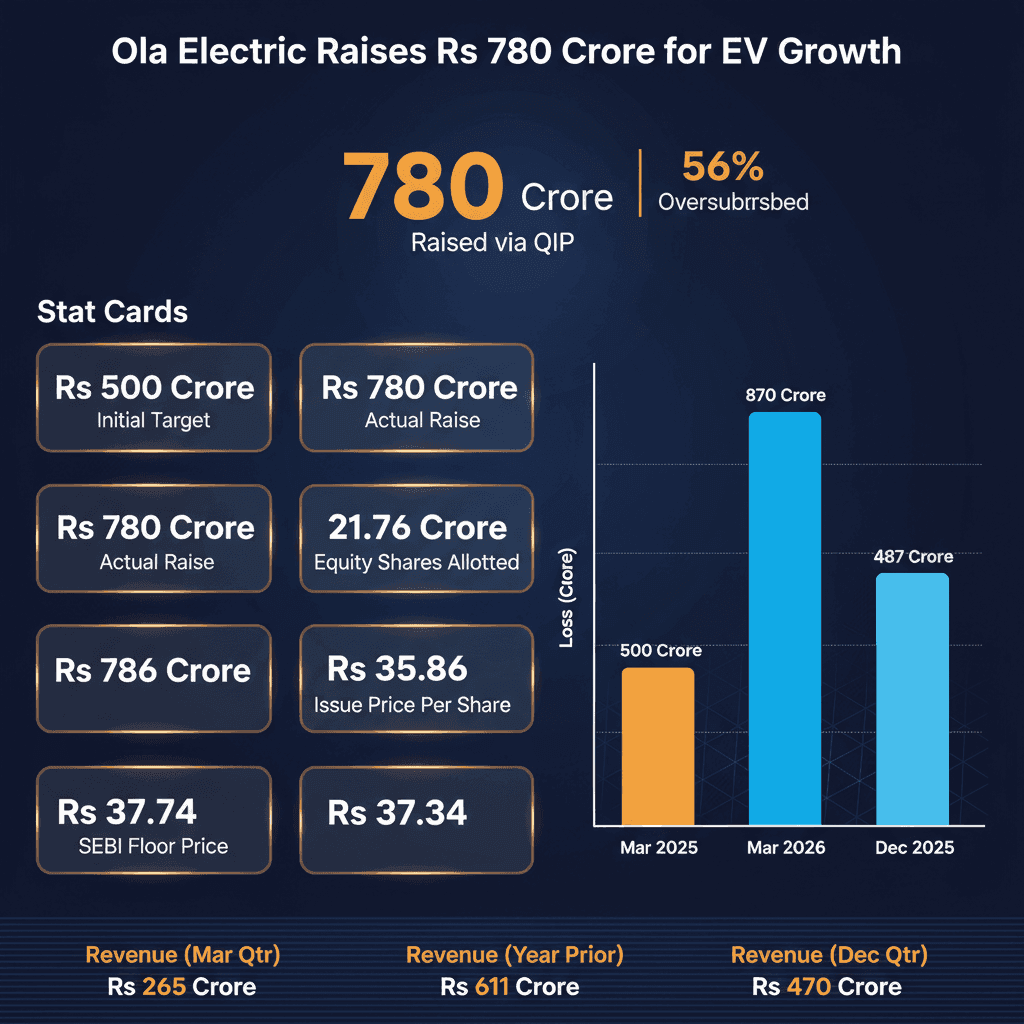
Ola Electric raises ₹780 crore via oversubscribed QIP, boosting its EV expansion plans and investor confidence in India’s competitive electric vehicle market.
Ola Electric Mobility has successfully raised approximately Rs 780 crore through a qualified institutions placement (QIP), securing a significant capital infusion for the Bengaluru-based electric vehicle manufacturer. This fundraise, which exceeded the company’s initial target of Rs 500 crore and was oversubscribed by 56%, signals continued institutional investor confidence in Ola Electric despite increasing competition in India’s electric two-wheeler market.
The capital infusion arrives at a pivotal time as Ola Electric aims to bolster its financial position, mitigate losses, and enhance its competitive edge within the rapidly evolving Indian EV sector.
QIP Details and Investor Participation
According to its stock exchange filings, Ola Electric allotted 21.76 crore equity shares to eligible qualified institutional buyers. The shares were issued at a price of Rs 35.86 per share, representing a discount from the SEBI-determined floor price of Rs 37.74 per share.
The QIP saw robust participation from several prominent institutional investors. Key participants included Goldman Sachs, BNP Climate Fund, Motilal Oswal Mutual Fund, Mirae Asset Mutual Fund, Kotak Mahindra Mutual Fund, JM Financial Mutual Fund, and Baroda BNP Paribas Mutual Fund.
A qualified institutions placement provides listed companies with a streamlined method to raise capital by issuing shares directly to institutional investors such as mutual funds, insurance companies, pension funds, and foreign portfolio investors, often bypassing the lengthy process of a public offering.
Strategic Importance Amid Market Challenges
For Ola Electric, the timing of this fundraise is critical. The company has navigated a challenging period marked by intensified competition from both established two-wheeler manufacturers and emerging electric mobility players. While Ola Electric initially led India’s electric scooter segment, the market has become increasingly competitive, with companies focusing on expanding EV portfolios, dealership networks, and after-sales services.
The fresh capital is earmarked to support debt repayment, fuel growth initiatives, and cover general corporate expenses. This financial flexibility is expected to enable Ola Electric to refine its operations, broaden its product range, and build sustainable capabilities within the broader EV ecosystem.
Financial Performance and Future Outlook
The capital raise follows a demanding financial year for the company. For the quarter ended March 31, 2026, Ola Electric reported a consolidated net loss of Rs 500 crore. This marked an improvement compared to a loss of Rs 870 crore in the same period a year prior, though the loss slightly widened sequentially from Rs 487 crore in the December quarter.
However, revenue from operations faced sustained pressure, declining to Rs 265 crore in the March quarter from Rs 611 crore a year earlier. Sequentially, revenue also saw a dip from Rs 470 crore recorded in the December quarter.
These financial figures indicate progress in loss reduction but underscore the ongoing challenge of revitalizing sales growth and optimizing operational efficiency. This QIP represents Ola Electric’s first significant equity fundraising since its public listing, aligning with a broader trend of new-age companies leveraging institutional investments to strengthen balance sheets and fund expansion.
The fundraise offers Ola Electric an opportunity to re-establish investor confidence and demonstrate its capacity to effectively deploy new capital to enhance its business fundamentals. The company’s immediate focus will be on improving sales performance, managing costs, expanding margins, elevating service quality, and defending its market position in India’s burgeoning electric two-wheeler sector.
India’s electric mobility market continues to present substantial long-term growth prospects, driven by factors such as rising fuel costs, supportive government policies, advancements in battery technology, and growing consumer interest in eco-friendly transportation solutions. However, the market demands are evolving, with customers increasingly prioritizing reliability, service networks, product quality, and brand trust alongside price and range.
Ola Electric’s Rs 780 crore QIP provides crucial capital at a critical juncture. The ultimate measure of its success will be the company’s ability to strategically deploy these funds to improve financial performance and regain momentum in the competitive EV landscape. The oversubscribed issue reflects investor belief in Ola Electric’s long-term EV narrative; the company’s execution in the coming quarters will be key to validating this confidence.