Mahanagar Gas Hikes CNG & Piped Gas Prices in Mumbai
By Sivam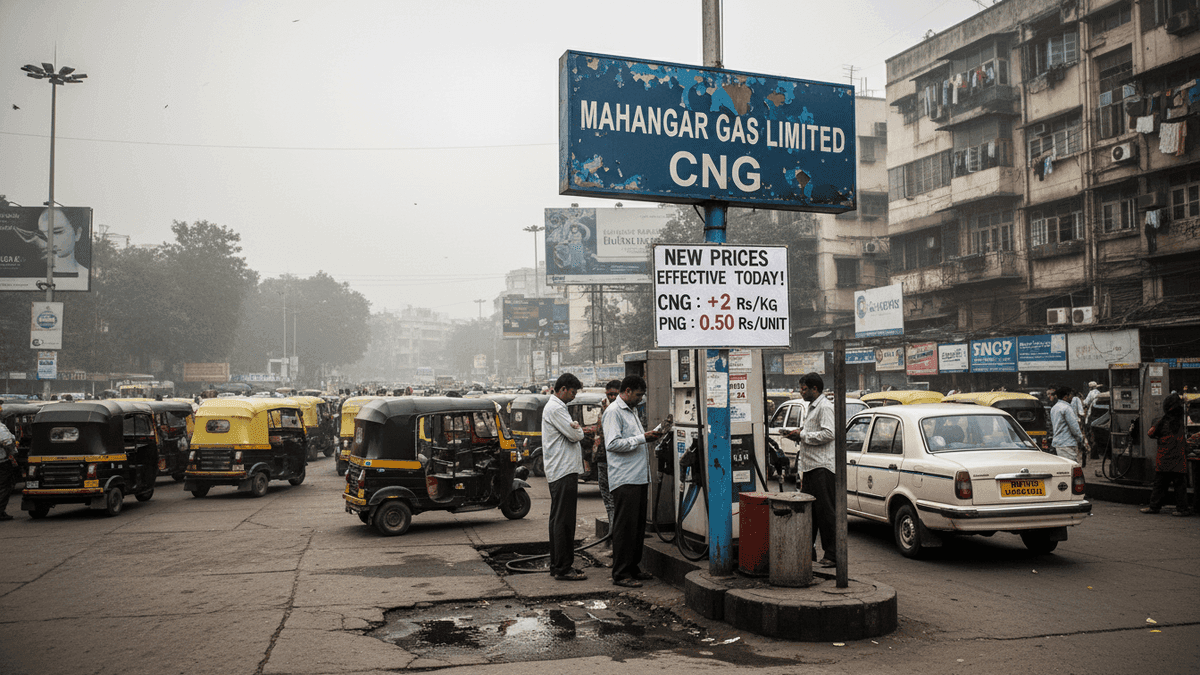
Mahanagar Gas Ltd (MGL) increases CNG by Rs 2/kg and piped gas by 50 paise/unit in Mumbai due to rising procurement costs. Impacting millions of households and transport users.
MGL Hikes CNG, Piped Gas Prices in Mumbai Metropolitan Region
Mahanagar Gas Ltd (MGL) has announced a significant price revision for compressed natural gas (CNG) and piped cooking gas (PNG) across the Mumbai Metropolitan Region. Effective from Saturday, the move will see CNG become costlier by Rs 2 per kilogram, while piped cooking gas rates will increase by 50 paise per unit. This adjustment, attributed by MGL to persistently rising gas procurement costs, is expected to directly impact millions of households and a substantial number of public transport users in the bustling economic hub, signaling broader economic implications for the region.
Revised Pricing Structure and Immediate Impact
Under the new pricing regime, consumers fueling their vehicles with CNG will now incur an additional cost of Rs 2 for every kilogram purchased. This change is particularly significant for the vast network of public transport vehicles that rely on CNG. Simultaneously, residential and commercial users of piped natural gas will face an increment of 50 paise for each unit consumed, directly affecting household budgets and operational costs for businesses that utilize PNG.
The price hike is set to take effect promptly, impacting daily transactions for both vehicle owners and domestic consumers. This immediate implementation underscores the urgency with which MGL is addressing its increased input costs, transferring a portion of this burden to the end-users across the sprawling Mumbai Metropolitan Region.
Strain on Household Budgets and Public Transport
The increase in piped cooking gas rates directly affects the monthly budgets of millions of families residing within the Mumbai Metropolitan Region. As an essential commodity for daily household operations, this increment translates into higher living expenses, potentially straining household finances that are already grappling with other inflationary pressures. Families will need to adjust their expenditure patterns to accommodate the rising cost of a fundamental utility.
For the public transport sector, particularly auto-rickshaws and taxis which heavily rely on CNG as their primary fuel, the Rs 2 per kilogram increase represents a substantial rise in operational expenditure. This immediate surge in fuel costs places considerable financial burden on individual drivers and larger fleet operators alike, many of whom operate on tight profit margins. The increased cost of fuel directly erodes their daily earnings, making their business less viable.
Intensifying Demands for Fare Revisions
Consequently, the announcement of these price hikes has intensified existing demands from various auto and taxi unions for corresponding fare increases. These unions argue that without an upward revision in passenger fares, their ability to sustain operations and maintain livelihoods under the new cost structure will be severely compromised. They highlight the necessity of adjusting fares to reflect the updated fuel prices, ensuring that the burden is not solely borne by service providers.
The call for fare revisions is a direct response to the economic pressure imposed by MGL’s decision. This situation sets the stage for potential negotiations and discussions between transport associations and municipal authorities, as stakeholders seek a balanced solution that accounts for both operational costs and affordability for commuters. The outcome of these discussions will be crucial for the stability of public transport services in the region.
Rising Gas Procurement Costs: The Underlying Factor
Mahanagar Gas Ltd explicitly cited rising gas procurement costs as the primary driver behind these significant price adjustments. The company’s operational expenses are intrinsically linked to the dynamics of global and domestic gas markets, which can be influenced by factors such as geopolitical events, supply chain disruptions, and fluctuations in international commodity prices. These external market forces dictate the input costs for city gas distribution companies like MGL.
By adjusting consumer prices, MGL is effectively passing on these increased procurement expenses to its customer base. This strategy aims to maintain the company’s financial viability and ensure a sustainable supply of natural gas to the Mumbai Metropolitan Region. The decision reflects a direct response to the economic realities faced by energy providers in the current market environment.
Broader Economic Implications and Future Outlook
The cumulative effect of these price hikes extends beyond individual consumers and transport operators, potentially generating a ripple effect across the broader economy of the Mumbai Metropolitan Region. Businesses that depend on CNG for their logistics and supply chains, or those that utilize piped gas for industrial processes, will also experience higher operating costs. This could, in turn, influence production costs and potentially lead to adjustments in consumer prices for other goods and services within the region.
As the new rates take effect from Saturday, stakeholders, including commuters, transport unions, and regulatory bodies, will closely monitor the situation and its economic ramifications. The ongoing pressure for fare revisions in the public transport sector is likely to remain a prominent issue, shaping the dialogue around urban mobility and cost of living. The long-term implications for energy consumption patterns and the regional economy also remain a point of observation for analysts and policymakers.