India’s V2X Road Safety Tech Delayed by Telecom-Auto Dispute
By Sivam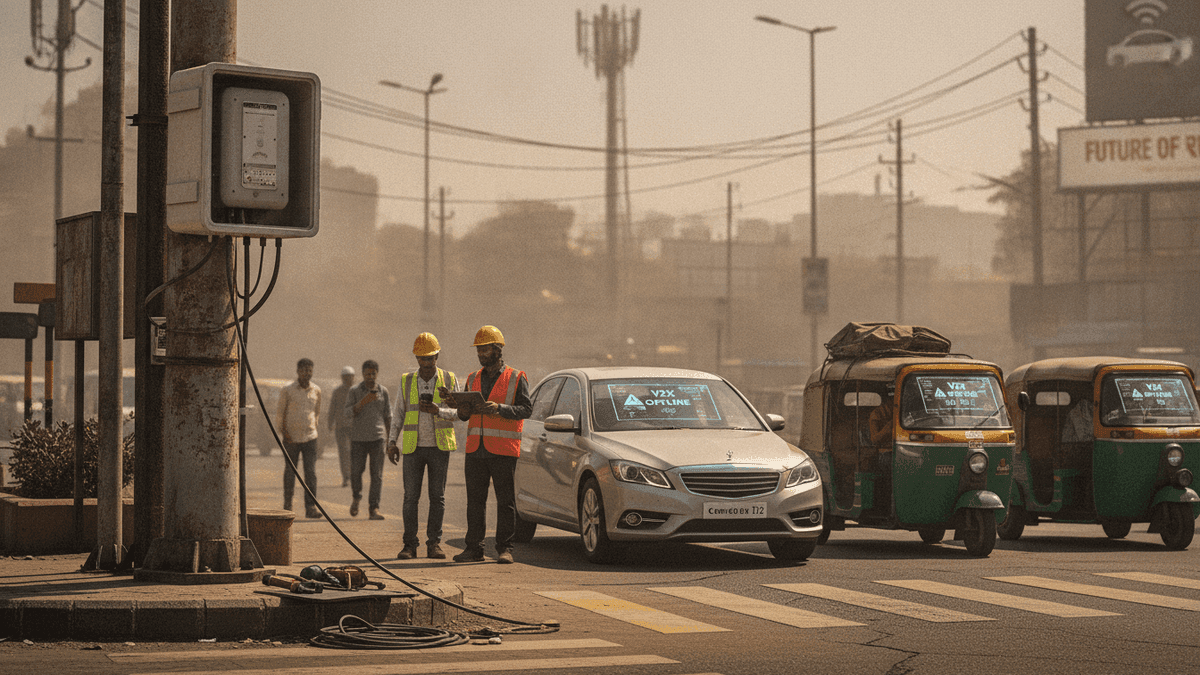
India’s V2X road safety tech deployment is stalled due to a clash between telecom and auto sectors over licensing and spectrum control, delaying critical safety advancements.
India’s V2X Deployment Faces Significant Delays
India’s ambitious plan to deploy Vehicle-to-Everything (V2X) technology, aimed at drastically reducing road fatalities, has encountered a major hurdle. A significant turf war has erupted among key stakeholders, including telecom operators, tech firms, and auto bodies, creating substantial delays in the rollout of this critical road safety infrastructure.
The disagreements primarily revolve around the control and management of the V2X ecosystem. These contentious issues are threatening to push back the timeline for a technology widely recognized for its potential to improve road safety through real-time communication between vehicles and infrastructure.
Core Disagreements Hinder Progress
The core of the dispute centers on critical aspects such as licensing frameworks for V2X devices, the allocation and management of dedicated spectrum, and the establishment of mandatory testing protocols. Each stakeholder group is vying for control, leading to a stalemate that prevents forward momentum on deployment.
Telecom operators and tech firms are advocating for specific regulatory approaches that align with their existing business models and technological capabilities. Conversely, auto bodies are pushing for frameworks that they believe better serve the automotive industry’s needs for integrated vehicle communication and safety standards.
Implications for Road Safety and Innovation
The prolonged delay in V2X deployment carries significant implications for India’s efforts to enhance road safety. The technology is designed to enable vehicles to communicate with each other, roadside infrastructure, and even pedestrians, providing alerts and preventing accidents before they occur.
The current impasse not only postpones the realization of these life-saving benefits but also risks stifling innovation within the domestic V2X sector. Without a clear regulatory path and agreed-upon standards, companies may hesitate to invest further in developing and implementing V2X solutions tailored for the Indian market.
Stakeholders Divided on Ecosystem Management
Stakeholders remain deeply divided on the optimal approach to manage this critical road safety ecosystem. The lack of consensus on how to best govern licensing, spectrum, and testing is the primary impediment to moving past the current standoff.
A unified strategy and collaborative efforts among all parties—telecom operators, tech firms, and auto bodies—will be essential to resolve these deep-seated disagreements. A swift resolution is imperative to unlock the full potential of V2X technology and achieve India’s goals for reducing road fatalities.