India’s Tractor Industry Slowdown: Monsoon’s Impact
By ThePip Desk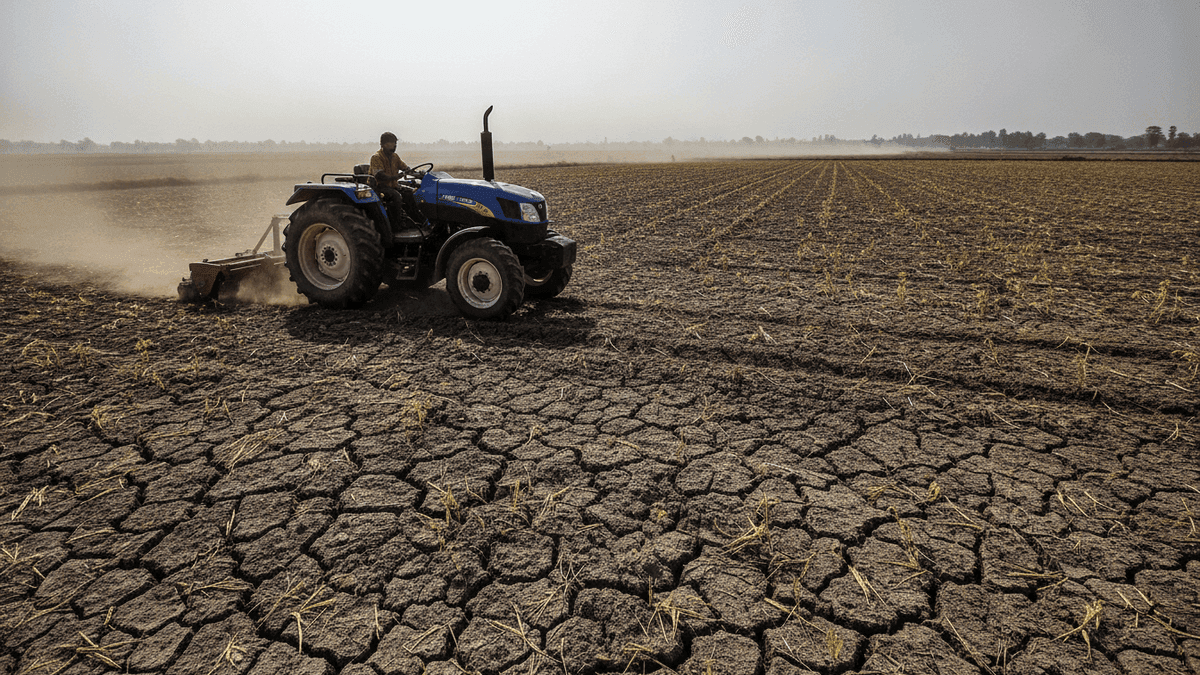
India’s tractor industry faces a projected 1-4% growth in FY27 due to a high base and below-normal monsoon forecasts. Analysis of structural impacts on agricultural demand.
India’s tractor industry is poised for a significant deceleration in volume growth for the current fiscal year (FY27), with ratings agency Icra projecting a mere 1-4 per cent expansion. This sharp slowdown from the robust 23.5 per cent growth recorded in FY26 reveals a structural vulnerability tied directly to environmental factors and their cascading economic effects.
The core drivers behind this anticipated contraction are two-fold: a substantial high base effect from the preceding fiscal year and the critical, yet concerning, forecast of a below-normal Southwest Monsoon. The Indian Meteorological Department (IMD) has issued its first-stage long-range forecast for 2026, indicating reduced rainfall largely due to the expected influence of El Nino conditions.
Further reinforcing these concerns, IMD data from June 2026 already highlights precipitation deficits across key agricultural regions in central, southern, and coastal India. This observed shortfall is not merely an isolated weather event; it represents a direct threat to kharif crop production, a cornerstone of agricultural output. A compromised kharif yield directly translates to diminished farm incomes, which are intrinsically linked to rural purchasing power.
The underlying framework here underscores how hydrological cycles, specifically monsoon patterns, act as a primary determinant for agricultural machinery demand. When farm incomes are depressed by inadequate rainfall, the discretionary spending on capital goods like tractors inevitably suffers. This dynamic creates a predictable, albeit challenging, inverse relationship between monsoon performance and tractor sales, exposing the sector’s reliance on stable climatic conditions.
For stakeholders observing India’s rural economy, this projected deceleration serves as a potent reminder of the agricultural sector’s inherent sensitivity to climate. While short-term growth rates may fluctuate, the long-term resilience of industries deeply integrated with agriculture, such as tractors, will continue to hinge on both adaptive farming practices and consistent, favourable weather patterns.