India’s Hydrogen Train: A Green Leap for Future Mobility
By ThePip Desk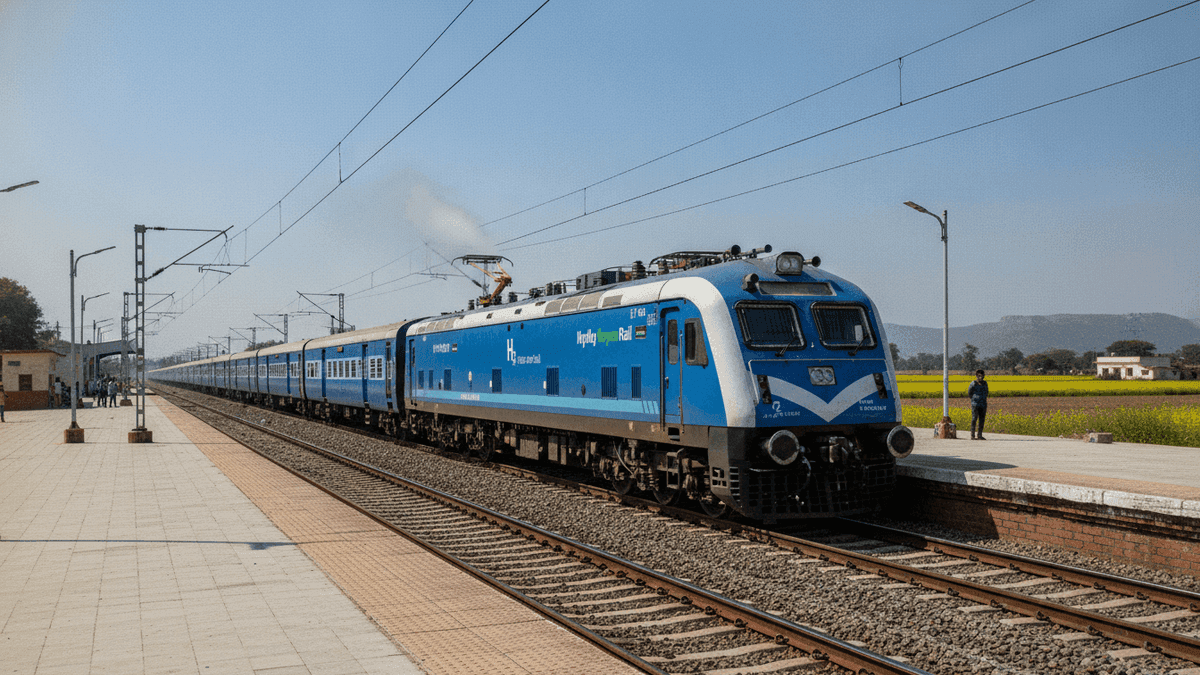
India launches its first indigenous hydrogen train, a significant step towards zero-emission transport and a testament to its growing green technology leadership.
🔥 Main Takeaway
India just powered up its first hydrogen train, positioning itself as a major player in sustainable transportation and cutting-edge green technology.
📌 What Happened?
Prime Minister Narendra Modi flagged off India’s inaugural hydrogen-powered train, featuring 10 coaches capable of carrying 2,600 passengers, set to operate between Jind and Sonipat in Haryana.
This train runs on hydrogen fuel cell technology, generating electricity by combining hydrogen from onboard cylinders with oxygen, resulting in zero direct emissions and only water vapor as a byproduct.
The entire project, from design to integration, was completed in India with contributions from RDSO, ICF, and Medha, highlighting the nation’s growing railway engineering capabilities.
India’s 10-coach hydrogen train is notably longer and more powerful than most global counterparts, which typically feature only 2-3 passenger coaches.
💰 Why It Matters
This launch significantly boosts India’s net-zero emissions target by 2030, especially for non-electrified or challenging routes, reducing reliance on imported fossil fuels like diesel.
It signals a major push for India’s National Green Hydrogen Mission, creating demand for domestically produced green hydrogen and fostering a new integrated railway ecosystem for production, storage, and refueling.
Being among a select group of countries operating such trains, India enhances its global standing in sustainable innovation and positions itself as a leader in advanced green infrastructure.
👀 What to Watch Next
Keep an eye on the economic viability of green hydrogen production and the expansion of refueling infrastructure, as these are critical for the widespread adoption of this technology.
Future developments will focus on integrating hydrogen trains into more diverse routes, including heritage and hill lines, to further reduce the carbon footprint of Indian Railways.