India’s EVs: A Hedge Against Volatile Fuel Prices
By Sivam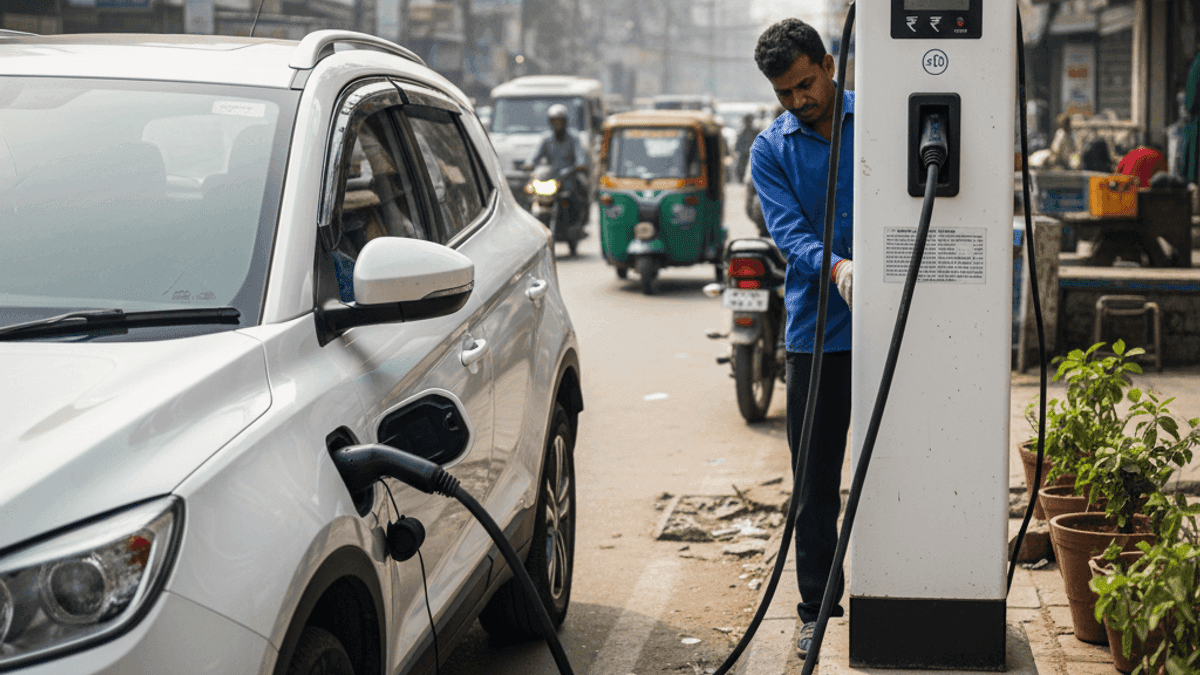
As crude oil prices surge and the rupee weakens, India’s electric vehicles emerge as a vital fiscal hedge, offering economic stability beyond eco-friendliness.
India’s energy security landscape is facing unprecedented challenges, marked by soaring crude oil prices exceeding $110 a barrel, a depreciating rupee, and escalating costs associated with stricter emission norms like E20 mandates and BS6 diesel. In this turbulent economic environment, electric vehicles (EVs) are rapidly transitioning from a niche green alternative to a strategic fiscal hedge, offering a potential solution to mitigate the volatility inherent in fossil fuel dependence.
The Escalating Cost of Fossil Fuels
The confluence of geopolitical factors and global supply chain disruptions has driven international crude oil prices to alarming levels. For India, a significant importer of crude oil, this translates directly into a higher import bill, exerting downward pressure on the rupee. Simultaneously, domestic fuel costs are further inflated by the implementation of stringent environmental regulations. The E20 mandate, requiring a blend of 20% ethanol with petrol, and the advancements in diesel engine technology under BS6 standards, which necessitate more complex and costly emission control systems, are adding to the operational expenses of internal combustion engine (ICE) vehicles. This combination of external and internal pressures creates a volatile and increasingly expensive fuel market for consumers and the nation.
Electric Vehicles as a Strategic Imperative
Against this backdrop, the accelerated adoption of electric vehicles presents a compelling economic rationale beyond environmental benefits. By reducing reliance on imported crude oil, India can significantly decrease its trade deficit and insulate its economy from the vagaries of global oil price fluctuations and currency depreciation. The cost of electricity, while subject to its own dynamics, offers a more stable and domestically controllable energy source compared to volatile international oil markets. This shift towards electrification is therefore not merely a response to climate change concerns but a calculated move towards enhancing economic stability and energy independence.
Government Push and Market Dynamics
The Indian government has been actively promoting EV adoption through various incentives, subsidies, and policy initiatives aimed at building a robust domestic EV ecosystem. These measures include production-linked incentives (PLI) for manufacturing advanced chemistry cell batteries and electric vehicles, as well as tax benefits for EV buyers. The burgeoning charging infrastructure network, though still in its nascent stages, is also a critical component of the government’s strategy to overcome range anxiety and encourage wider consumer acceptance. As more automakers introduce competitive EV models and battery technology advances, the total cost of ownership for EVs is becoming increasingly attractive, further accelerating their market penetration.
Economic Implications of EV Transition
The transition to electric mobility has profound implications for India’s fiscal health. A significant reduction in oil imports can lead to substantial savings in foreign exchange, bolstering the nation’s financial reserves and strengthening the rupee. Furthermore, the development of a domestic EV manufacturing sector, including battery production, has the potential to create numerous jobs and foster technological innovation, contributing to overall economic growth. While the initial investment in charging infrastructure and grid upgrades is considerable, the long-term economic benefits derived from reduced fuel import dependency and a more stable energy cost structure are expected to outweigh these upfront costs. EVs are thus emerging as a vital instrument in India’s strategy to navigate economic headwinds and build a more resilient and self-reliant economy.