India’s EV Market to Surge 12x by 2032: 30M Units
By ThePip Desk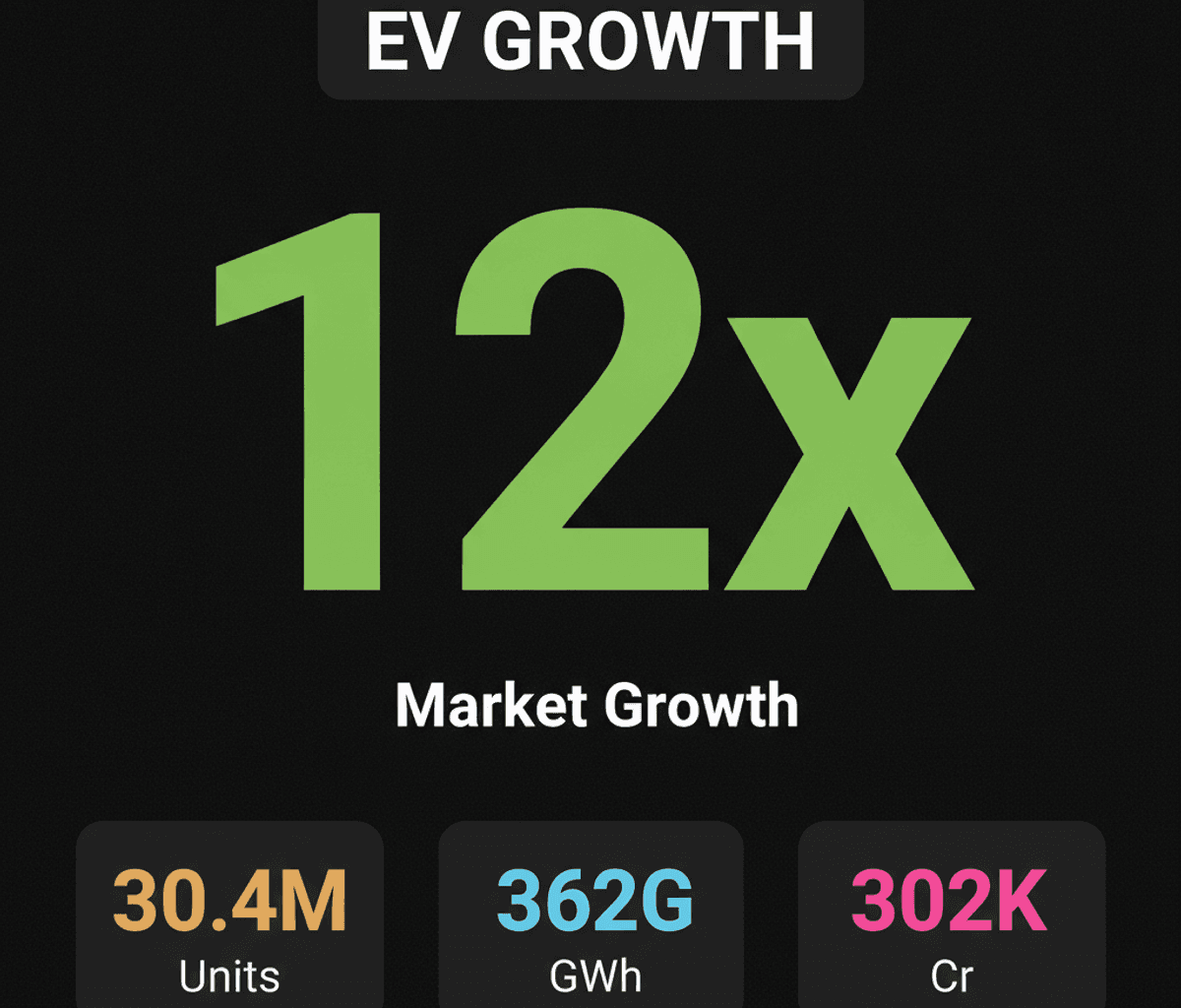
India’s electric vehicle market is poised for a monumental 12-fold expansion, reaching 30.4 million units by 2032. Driven by rising fuel costs and new models, this surge presents significant investment opportunities.
🔥 Main Takeaway
India’s electric vehicle market is gearing up for an explosive 12-fold growth, projecting 30.4 million units sold annually by 2032, signaling a massive shift for investors and consumers.
📌 What Happened?
A new report by the India Energy Storage Alliance (IESA) and Customized Energy Solutions predicts India’s EV market will hit 30.4 million units by 2032 under a high-growth scenario.
Annual EV sales are expected to jump approximately 26%, from 2.0 million units in 2024 to 2.6 million units in 2025, showing rapid adoption.
EVs made up 9.5% of India’s total vehicle sales in 2025, up from 8.1% in 2024, driven by higher fuel prices and a wider range of appealing new models, including SUVs.
Electric two-wheelers (E2W) and three-wheelers (E3W) dominated 2025 sales, collectively accounting for over 91% of the approximately 2.5 million total EV units.
💰 Why It Matters
This massive growth trajectory means huge investment opportunities in EV manufacturing, battery technology, and charging infrastructure within India.
The demand for EV batteries is set to skyrocket from 19 GWh in 2025 to 362 GWh by 2032, making battery producers and raw material suppliers key players.
The Indian EV component market, valued at Rs 41,000 crore in 2025, is projected to reach Rs 3,02,000 crore by 2032, offering a 38% compound annual growth rate for specialized component makers.
Consumers can expect more affordable and diverse EV options as competition intensifies and local manufacturing scales up, especially in the two- and three-wheeler segments.
👀 What to Watch Next
Keep an eye on government policy support, infrastructure development, and local manufacturing initiatives, which are crucial for sustaining growth beyond 2029.
Companies that can establish deep domestic manufacturing capabilities in power electronics and drivetrain integration are poised for significant rewards in this burgeoning market.
Watch for further localization efforts, especially in motor, controller, inverter, and Battery Management System (BMS) hardware, as India aims to reduce import dependence.