India’s Economy: Trade Protectionism & Sectoral Growth
By Sivam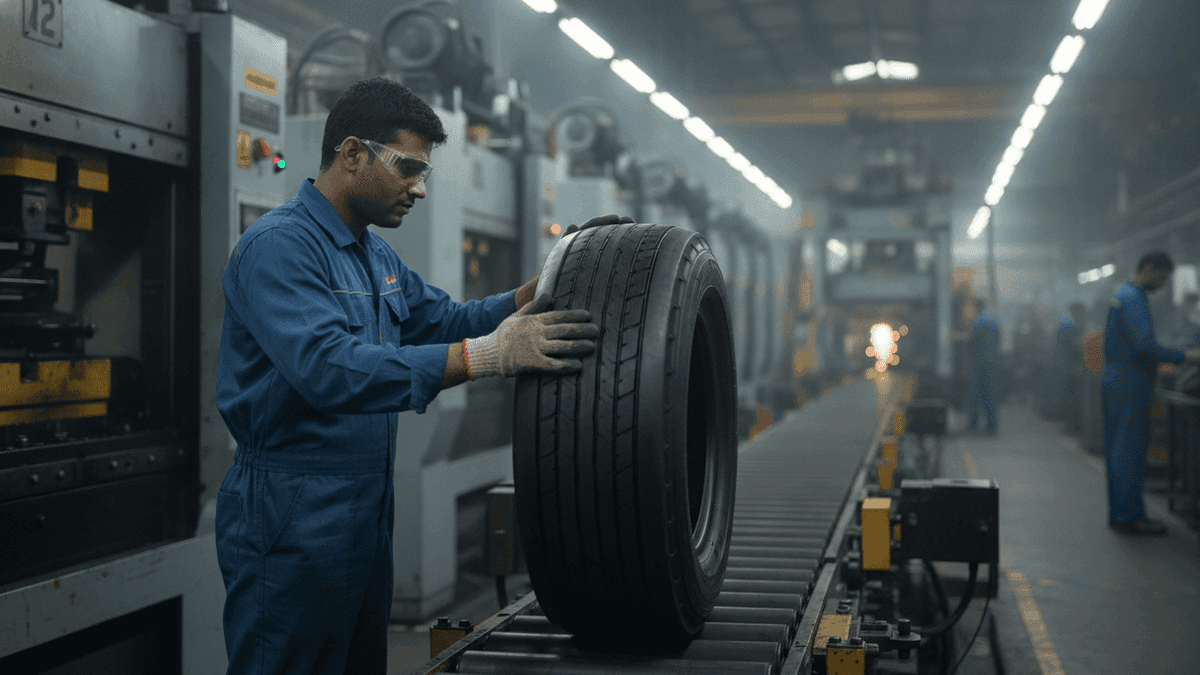
India faces dual economic challenges: an anti-dumping probe on Resorcinol imports and moderated growth in the two-wheeler sector. Explore the implications.
India is currently navigating a multifaceted economic landscape, characterized by proactive trade defense measures on one front and the recalibration of growth expectations in a key domestic sector on another. This dual dynamic reflects underlying structural patterns in global trade and the interplay of macroeconomic factors with specific industry performance.
A significant development involves the initiation of an anti-dumping investigation into ‘Resorcinol’ imports from China and Japan. This industrial chemical, critical for tyre and rubber manufacturing, is at the heart of a complaint lodged by Atul Ltd with the Directorate General of Trade Remedies (DGTR). The core mechanism of such a probe is to ascertain whether foreign producers are exporting goods at prices below their normal value, thereby causing material injury to domestic industries. This move underscores India’s commitment to employing established trade policy frameworks to safeguard its manufacturing base against what it perceives as unfair competition.
Understanding Trade Defense Mechanisms
The anti-dumping duty framework serves as a vital tool for economies seeking to protect local producers from predatory pricing strategies by foreign entities. When a domestic company, like Atul Ltd, alleges that cheap imports are causing substantial injury, the DGTR steps in to meticulously examine the existence, degree, and effect of the alleged dumping. This process, rooted in international trade law, aims to restore a level playing field without resorting to outright protectionism, instead targeting specific instances of market distortion.
This particular investigation highlights the structural vulnerability of certain domestic chemical industries to global supply chain dynamics and the pricing power of major exporting nations. The outcome will not only impact the supply chain for tyre and rubber products but also set a precedent for future responses to similar import challenges from these regions.
India’s Two-Wheeler Sector: Navigating Macroeconomic Tides
Concurrently, the Indian two-wheeler industry faces a moderated growth outlook, despite recent robust performance. Ratings agency ICRA projects a 3-5 per cent growth in wholesale volumes for FY27, a forecast that warrants a deeper look into the interplay of demand and supply-side factors. This anticipated moderation comes even as domestic wholesale volumes recorded a strong 15.7 per cent year-on-year growth to 19 lakh units in May 2026, demonstrating underlying resilience.
The structural pattern of growth in this sector is influenced by several macroeconomic currents. ICRA identifies potential headwinds including a high base effect from previous strong growth, the possibility of a weak monsoon season due to El Nino conditions impacting rural demand, and vehicle price increases driven by inflationary pressures. These factors collectively exert downward pressure on the growth trajectory, even as the industry benefits from tailwinds such as improving domestic demand, healthy retail momentum, sustained growth in exports, and enhanced affordability. The moderate 3-5% growth projection reflects the careful balancing act between these opposing forces, suggesting that while the foundational demand remains, external pressures will temper the pace of expansion.
This scenario illustrates how sector-specific performance, even in a resilient market like India’s two-wheeler segment, is inextricably linked to broader economic and climatic variables. Understanding this interplay is crucial for stakeholders to anticipate market shifts and adapt their strategies accordingly.
The dual narratives of proactive trade defense and moderated sectoral growth underscore India’s dynamic economic environment. Both situations demand a nuanced understanding of underlying mechanisms and the complex interplay of domestic and global factors. As the DGTR proceeds with its investigation and the two-wheeler industry adapts to evolving market conditions, these structural patterns will continue to shape India’s economic trajectory.