India’s Auto Sector: Software Drives Structural Transformation
By ThePip Desk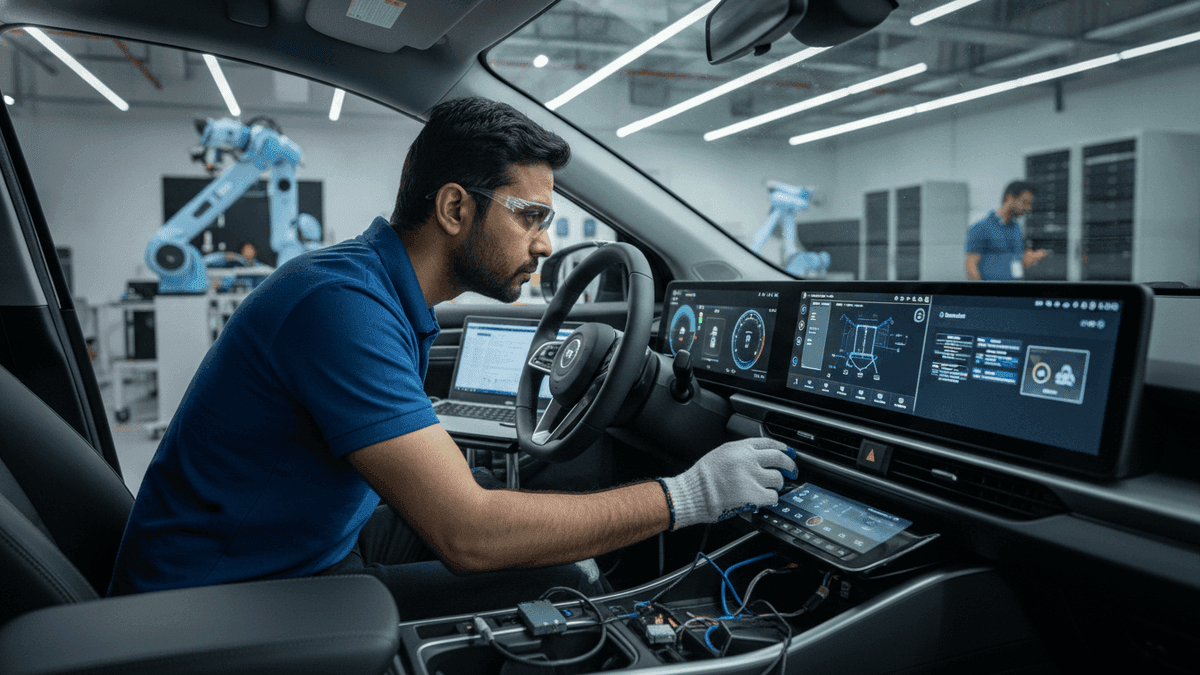
India’s automotive industry is transforming with software-defined vehicles. Harman India eyes significant growth amid global challenges, driven by market potential and tech adoption.
India’s automotive sector is poised for a profound structural transformation, driven by an escalating demand for software-defined vehicles and advanced connectivity solutions. This underlying shift is particularly evident in the projections from Harman India, which anticipates doubling its automotive business within the next five years, illustrating a powerful sectoral trend despite broader global economic uncertainties.
This aggressive growth trajectory is rooted in India’s unique market dynamics. With a relatively low car penetration rate of approximately 35 cars per 1,000 people, the market offers substantial headroom for expansion. Simultaneously, Indian consumers demonstrate a strong inclination towards adopting advanced automotive technology, creating a fertile ground for innovation. Harman, a Samsung-owned entity, has strategically invested over Rs 550 crore cumulatively in India, including a recent Rs 350 crore expansion of its Pune manufacturing facility, signaling a clear commitment to this long-term opportunity.
Beyond manufacturing, India has rapidly evolved into Harman’s largest global engineering base, employing approximately 4,000 engineers across its Bengaluru and Pune operations. This signifies a fundamental shift in India’s role from a support hub to a pivotal center for global innovation, with local teams spearheading the development of crucial connected vehicle technologies for worldwide deployment. This structural evolution underscores India’s growing importance in the global automotive R&D ecosystem.
The future growth within this sector is fundamentally driven by technological advancements. Software, connected vehicles, and intelligent cockpit technologies are emerging as primary differentiators in the automotive landscape. Harman’s comprehensive portfolio, encompassing car audio brands like JBL and Harman Kardon, advanced infotainment systems, and telematics solutions for 4G, 5G, and satellite communication, positions it at the nexus of these trends. The connectivity segment, in particular, is expected to become a significant growth engine, reflecting the market’s expectation that nearly all future vehicles will incorporate internet connectivity.
Strategic moves, such as Harman’s efforts to bolster its Advanced Driver-Assistance Systems (ADAS) capabilities through the acquisition of ZF’s passive safety business, further illustrate the industry’s direction. Moreover, global supply chain disruptions are accelerating a shift towards more resilient regional supply chains. This structural realignment benefits operations like Harman India, which are increasingly integrated into global supply networks, enhancing their strategic value and reinforcing the country’s position as a robust manufacturing and innovation hub.
As Moody’s Analytics forecasts India to remain the fastest-growing major economy in 2026 and 2027 amidst a global slowdown, the automotive sector’s software and connectivity-driven transformation stands as a compelling example of structural resilience and strategic growth. The interplay of low market penetration, high consumer tech adoption, and a burgeoning engineering base positions India not just for economic expansion, but for a leadership role in defining the future of connected mobility.