Indian Stocks Dip Amid Geopolitical Tensions: Impact on Your Funds
By Sivam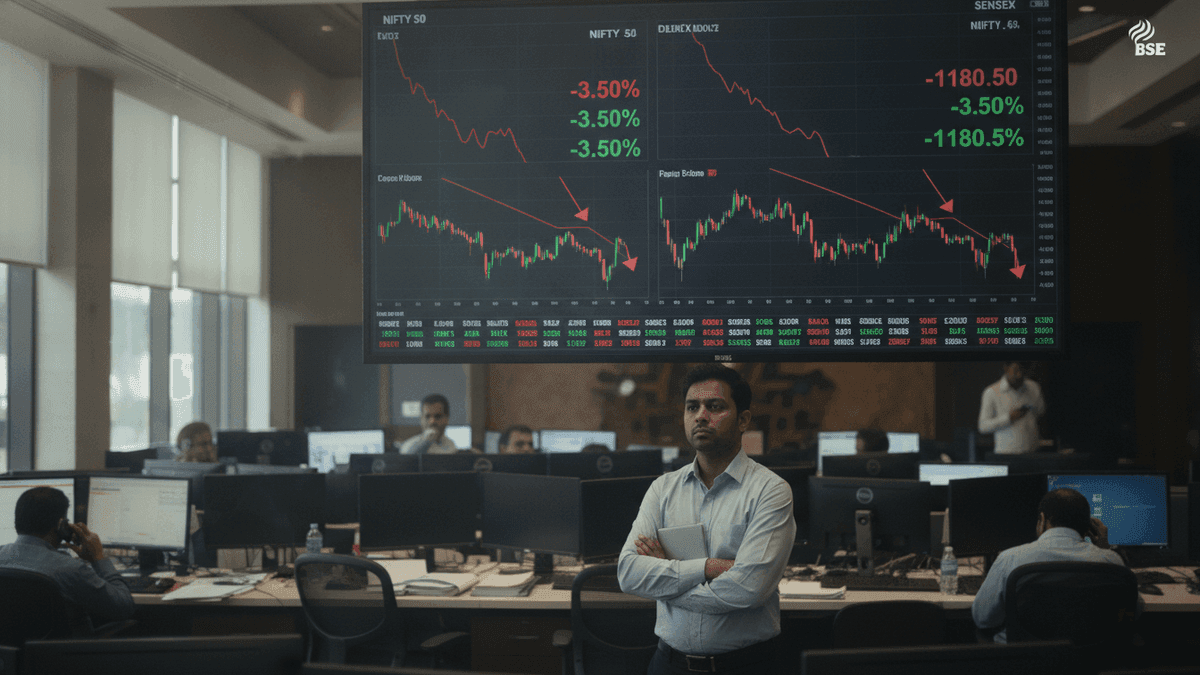
Indian equities fell Monday due to geopolitical tensions, impacting IT, auto, and banking sectors. See how market shifts affect your investment portfolio’s NAV.
Geopolitical concerns broadly weighed on Indian equities, potentially affecting your diversified funds.
- What happened: Indian equity benchmarks closed lower on Monday, experiencing selling pressure across IT, auto, and banking sectors.
- Why it happened: Renewed geopolitical tensions in the Middle East drove cautious trading and market declines.
- What it means for the reader: While specific fund impacts vary, broad market downturns can reflect in the Net Asset Value (NAV) of your equity-linked investments.
On Monday, Indian equity benchmarks experienced a decline, closing lower as renewed geopolitical tensions in the Middle East cast a shadow over investor sentiment. Major indices began cautiously before slipping into negative territory, remaining under pressure throughout the trading session. This downturn was notably led by significant selling activity in the information technology (IT), automotive, and banking sectors.
The primary driver behind this market movement was the escalating geopolitical instability, which often prompts investors to move towards safer assets, reducing exposure to equities. Additionally, traders adopted a wait-and-see approach ahead of the release of India’s Index of Industrial Production (IIP) data for May, which was expected later that day. This combination of external concerns and anticipation of domestic economic indicators contributed to the market’s cautious mood.
For many investors, especially those with Systematic Investment Plans (SIPs) or diversified mutual funds, such broad market corrections can feel unsettling. While it’s easy to focus on daily dips, it’s crucial to remember that your portfolio’s Net Asset Value (NAV), which represents the per-unit price of a fund, reflects these market movements. The selling pressure across major sectors means that funds heavily invested in IT, auto, or banking stocks would have likely seen a corresponding dip.
However, it’s worth noting that market reactions to geopolitical events are often temporary. Crisil Ratings, in a recent report, suggested that the profitability impact for India Inc from easing West Asia tensions would likely be limited. This perspective offers a reminder that while short-term volatility is a given, the underlying economic resilience and corporate health can provide a buffer over the longer term for your investments.
ONE THING TO CONSIDER TODAY
Now might be a good time to review the diversification of your equity portfolio to ensure it aligns with your long-term financial goals.