India Fuel Prices Rise Again: Iran War, Global Crude Surge
By Sivam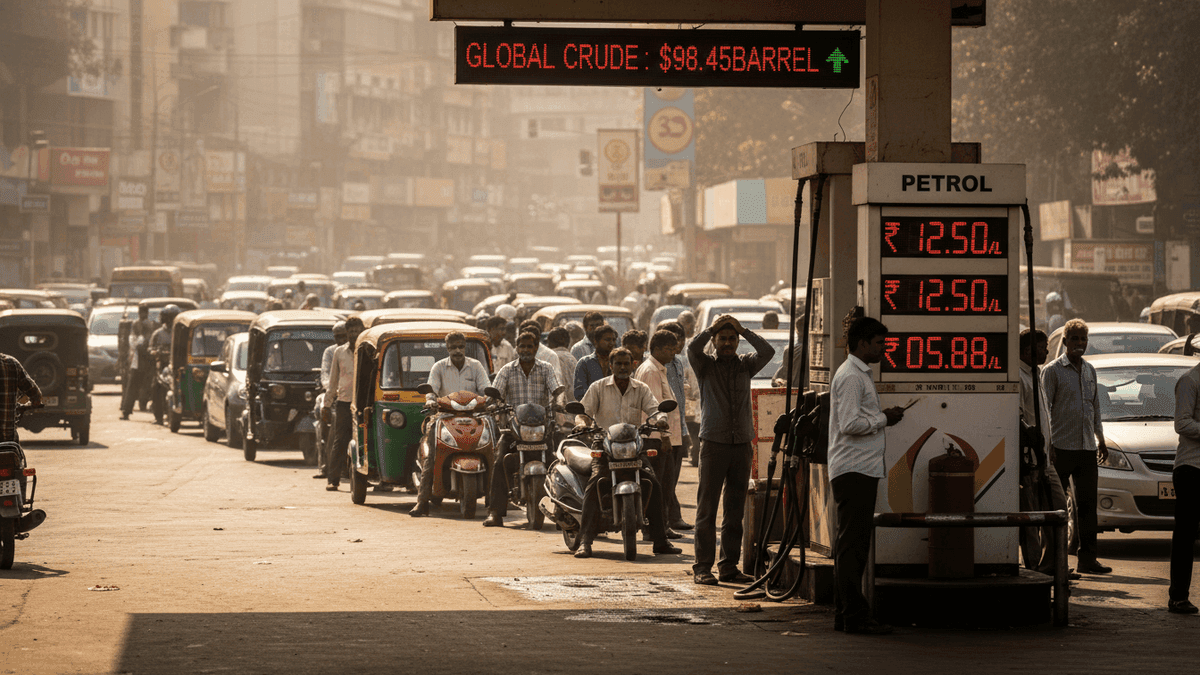
India faces its fourth fuel price hike in two weeks as global crude oil prices surge due to the Iran conflict. Consumers bear the brunt of rising costs.
Indian consumers are currently experiencing a significant escalation in fuel costs, with petrol and diesel prices witnessing their fourth increase in less than two weeks. This series of price adjustments marks a direct response to the persistent surge in global crude oil prices, further exacerbated by ongoing geopolitical tensions, particularly in the context of the conflict involving Iran. The hikes underscore a shift in policy, as oil companies in India begin to pass on the mounting costs to end-users after an extended period of absorption.
For a considerable duration, India had largely insulated its consumers from the full brunt of rising international energy costs. This protective measure, while beneficial for consumer sentiment, placed substantial financial strain on the nation’s oil marketing companies. These entities have been grappling with significant daily losses, making the current price revisions an unavoidable step to ensure their operational viability and to align domestic fuel prices more closely with international benchmarks.
Global Crude Oil Dynamics and Geopolitical Impact
The primary catalyst for the recent domestic fuel price increases is the volatile global crude oil market. International crude oil benchmarks have seen sharp upward trajectories, influenced by a confluence of factors including robust demand recovery in key economies and supply-side constraints. Crucially, the geopolitical landscape, particularly the conflict involving Iran, has introduced a substantial risk premium into oil prices. Any perceived threat to oil production or transit routes in the Middle East tends to trigger immediate and significant price reactions on global commodity exchanges, directly impacting import-dependent nations like India.
The sustained nature of these global price surges, coupled with the unpredictable trajectory of geopolitical events, presents a complex challenge for energy policy. The interconnectedness of global energy markets means that localized conflicts or policy shifts in major oil-producing regions quickly reverberate across the world, manifesting as higher input costs for refineries and, subsequently, increased pump prices for consumers in importing nations. This dynamic highlights India’s vulnerability to external shocks in the energy sector.
Operational Pressures on Indian Oil Companies
Before the recent series of hikes, Indian oil companies were absorbing a considerable portion of the elevated international crude oil prices. This practice, while aimed at price stability for consumers, resulted in significant daily losses that threatened the financial health of these crucial public sector undertakings. The quantum of these losses had reached unsustainable levels, necessitating a recalibration of pricing strategies.
The decision to increase fuel rates reflects a strategic move by these companies to mitigate their financial exposure and ensure economic sustainability. While the government often plays a role in influencing fuel pricing, the operational realities of the oil companies, driven by procurement costs and market dynamics, ultimately dictate the necessity of such adjustments. The current hikes are a direct consequence of the widening gap between the cost of acquiring crude oil and the previous retail selling prices of petrol and diesel.
India’s Evolving Fuel Pricing Strategy
Historically, the Indian government has employed various mechanisms, including subsidies and excise duty adjustments, to cushion consumers from steep fluctuations in global crude oil prices. This approach has been a cornerstone of economic policy aimed at managing inflation and ensuring affordability. However, the current environment of persistently high and volatile international prices, coupled with the significant financial burden on oil companies, suggests a shift in this strategy.
The current round of price increases indicates a move towards a more market-aligned pricing mechanism, where domestic fuel rates more rapidly reflect changes in global crude oil prices. While this ensures the financial health of oil marketing companies, it also means that Indian consumers will be more directly exposed to international market volatility. This evolution in pricing strategy is crucial for long-term energy security and the financial stability of the energy sector, albeit with immediate implications for household budgets and broader economic indicators.
Economic Implications and Forward Outlook
The repeated increases in petrol and diesel prices carry significant economic implications for India. Fuel is a critical input cost for almost all sectors of the economy, from transportation and logistics to manufacturing and agriculture. Higher fuel prices can directly contribute to inflationary pressures, increasing the cost of goods and services and potentially impacting consumer purchasing power. This could have a ripple effect across the economy, influencing everything from food prices to manufacturing output.
Looking ahead, the trajectory of fuel prices in India will largely depend on the stability of global crude oil markets and the resolution of geopolitical tensions, particularly those involving major oil-producing regions. Any de-escalation of conflicts or an increase in global oil supply could provide some relief. Conversely, continued instability or supply disruptions would likely lead to further price pressures. The Indian government and oil companies will continue to navigate this complex environment, balancing consumer affordability with the economic realities of global energy markets.