India Becomes BlaBlaCar’s Largest Market Due to Fuel Prices
By Sivam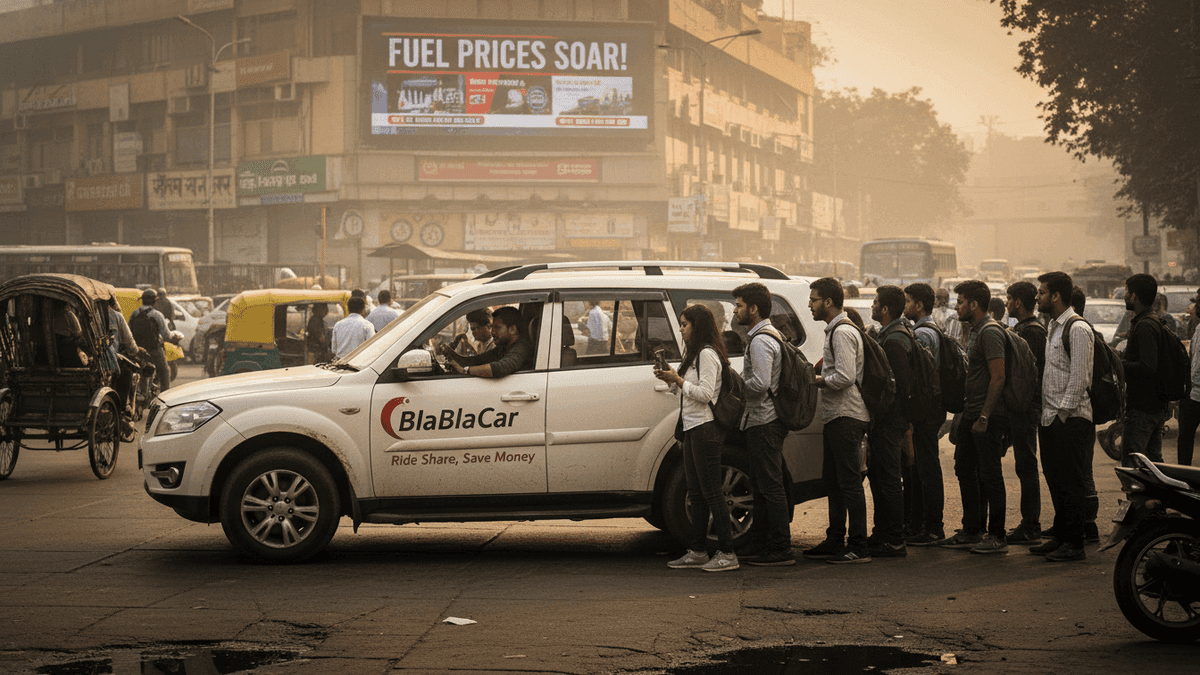
Rising fuel prices, driven by global events, have made India BlaBlaCar’s top market as users seek affordable carpooling solutions.
India Becomes BlaBlaCar’s Top Market Amid Fuel Price Surge
India has officially become the largest market for BlaBlaCar, the prominent global ride-sharing platform. This significant milestone is directly attributed to a sharp surge in fuel prices, which has accelerated the adoption of carpooling across the nation. The development highlights a critical shift in consumer behavior, as individuals increasingly seek cost-effective alternatives for their daily commutes and longer journeys amidst rising economic pressures.
The upward trajectory of fuel costs, significantly influenced by ongoing geopolitical events, particularly the Middle East war, has created an urgent demand for more affordable transportation. This macroeconomic backdrop has positioned BlaBlaCar as a crucial facilitator for millions of users looking to mitigate the financial strain of travel, cementing India’s status as the company’s leading operational territory.
Global Fuel Price Volatility Boosts Carpooling Demand
BlaBlaCar has observed a substantial uptick in both new user registrations and overall activity on its platform, a trend directly correlated with the escalating prices at the fuel pump. This indicates a strong consumer response to economic pressures, with a clear preference for shared mobility solutions that offer a tangible reduction in personal expenditure on transportation. The platform’s ability to provide a cheaper way to travel has resonated widely.
This phenomenon is not unique to India but is acutely felt in regions where fuel price increases have been both sudden and significant. In such markets, where governmental interventions or subsidies to cushion the impact of these hikes are limited, carpooling emerges as a vital economic coping mechanism. The absence of substantial government support amplifies the appeal of ride-sharing as a practical solution for citizens, accelerating market penetration.
Market Dynamics and Consumer Behavior Shifts
The situation in France serves as a compelling parallel, where similar dynamics of sudden and considerable fuel price inflation, coupled with constrained government relief, have spurred a notable increase in carpooling engagement. These instances underscore a broader global pattern where economic volatility directly translates into altered consumer preferences for mobility, favoring shared-economy models.
The company’s strategic positioning in markets experiencing these economic headwinds appears to be a key driver of its recent success. By offering a direct solution to a widespread financial challenge, BlaBlaCar is capitalizing on a shifting economic landscape where cost-efficiency has become a paramount factor influencing consumer choices in the transportation sector. This adaptability allows the platform to thrive during periods of economic uncertainty.
Strategic Implications for Ride-Sharing Platforms
India’s ascent to BlaBlaCar’s largest market provides crucial insights into the evolving landscape of shared mobility. It demonstrates the profound impact that external economic variables, such as global commodity price fluctuations, can have on local market structures and consumer adoption rates of innovative transportation solutions. The Indian market serves as a blueprint for growth in similar economies facing similar cost pressures.
Furthermore, the sustained volatility in global fuel prices suggests a potentially enduring shift towards shared transportation models. For platforms like BlaBlaCar, this scenario implies not just immediate growth but also the prospect of deeper, long-term market penetration. Shared mobility is increasingly becoming an indispensable part of urban and intercity travel infrastructure, offering a robust economic alternative against consistently rising travel expenditures.
This sustained growth trajectory in key markets like India positions BlaBlaCar strategically within the global transport ecosystem. It underscores the potential for ride-sharing to evolve from a niche offering to a mainstream necessity, especially as economic factors continue to influence consumer spending habits and demand for sustainable, affordable travel options. The long-term implications point towards a fundamental reshaping of personal mobility choices.