Gujarat’s Bharat Taxi: A Driver-Owned Cooperative Model
By Varun Mittal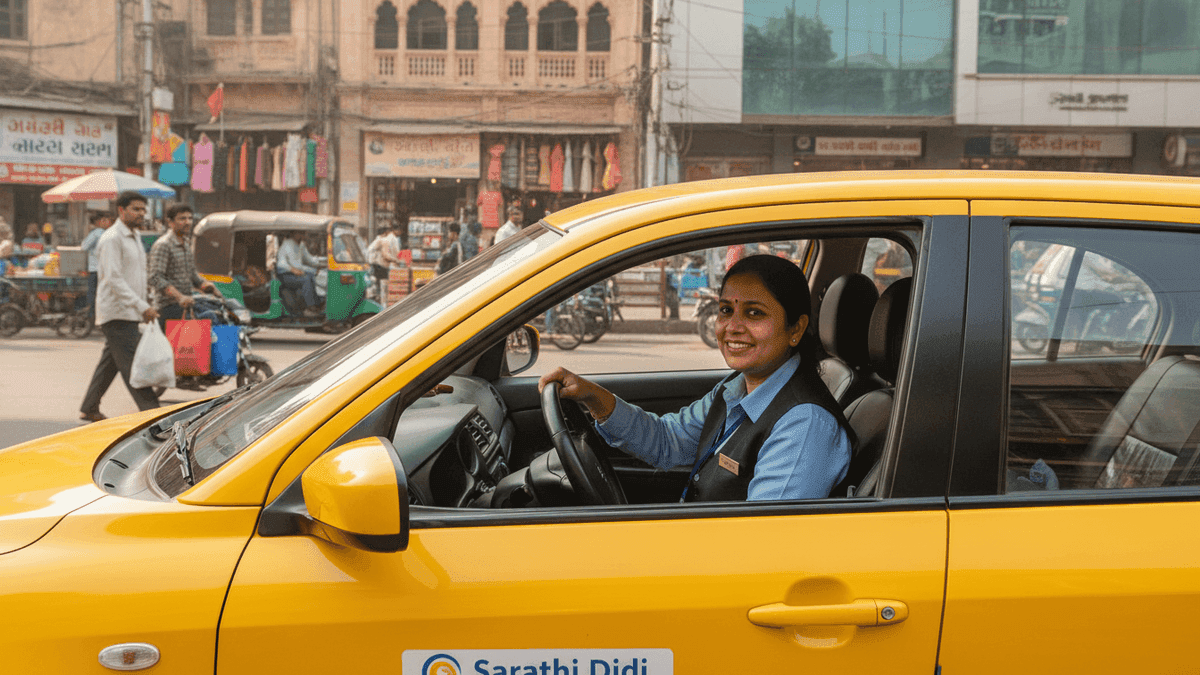
Gujarat’s Bharat Taxi revolutionizes ride-hailing by making drivers owners and profit-sharers, redefining the gig economy.
Gujarat has unveiled a significant structural shift in the ride-hailing sector with the launch of Bharat Taxi, a cooperative initiative designed to empower drivers through profit-sharing and direct ownership. This model fundamentally diverges from the traditional gig economy structure, where drivers typically receive fixed earnings, by positioning them as “Sarathis” or genuine stakeholders in the venture.
This move, announced by Gujarat Chief Minister Bhupendra Patel, aligns with a broader national vision championed by Prime Minister Narendra Modi and Union Cooperation Minister Amit Shah. Their objective is to expand the cooperative movement beyond its historical strongholds in agriculture, dairy, animal husbandry, and banking, extending its reach into modern sectors like mobility.
The Cooperative Framework: Realigning Incentives
The essence of the cooperative model, particularly as applied to Bharat Taxi, lies in its ability to realign incentives. In conventional platform economies, a core tension often exists between the platform’s profit maximization and the individual earnings of its service providers. By granting drivers ownership and a share in the company’s profits, Bharat Taxi attempts to bridge this gap, fostering self-reliance and dignity among its workforce.
Established by eight prominent cooperative institutions, Bharat Taxi is described as the world’s largest driver-owned cooperative structure. Since its launch earlier this year, the platform has rapidly scaled, enrolling seven lakh members and serving over 37 lakh customers. These figures suggest a significant appetite for an alternative model that promises more equitable value distribution.
Operational Transparency and Social Impact
Beyond driver empowerment, the cooperative framework introduces other notable features. Bharat Taxi pledges transparent fare standards for passengers, a critical factor in building trust and predictability within the ride-hailing market. Furthermore, the ‘Sarathi Didi’ initiative aims to create employment opportunities specifically for women drivers, simultaneously enhancing women’s safety across the network.
Chief Minister Patel expressed confidence that Gujarat’s deep-rooted cooperative tradition would be a key enabler for Bharat Taxi’s success. This institutional and cultural support is crucial for a model that relies heavily on collective participation and governance, potentially leading to higher incomes for its Sarathis throughout the country.
The Structural Implications for Gig Economies
The emergence of models like Bharat Taxi signals a potential re-evaluation of the foundational economics of gig work. While traditional venture-backed platforms prioritize rapid growth and shareholder returns, cooperative structures emphasize member welfare and sustainable value creation. The challenge for such models typically involves balancing democratic governance with the need for agile decision-making and access to capital for technological innovation and expansion.
However, the proven scale of Bharat Taxi’s initial adoption suggests that a driver-centric cooperative approach can indeed gain traction. This initiative provides a tangible case study for how the cooperative movement can structurally integrate into contemporary, technology-driven sectors, offering an alternative pathway for labor relations and wealth distribution that could resonate across India’s expansive gig economy.