French Military Engineering in Polynesia: Nuclear Program Support
By Sivam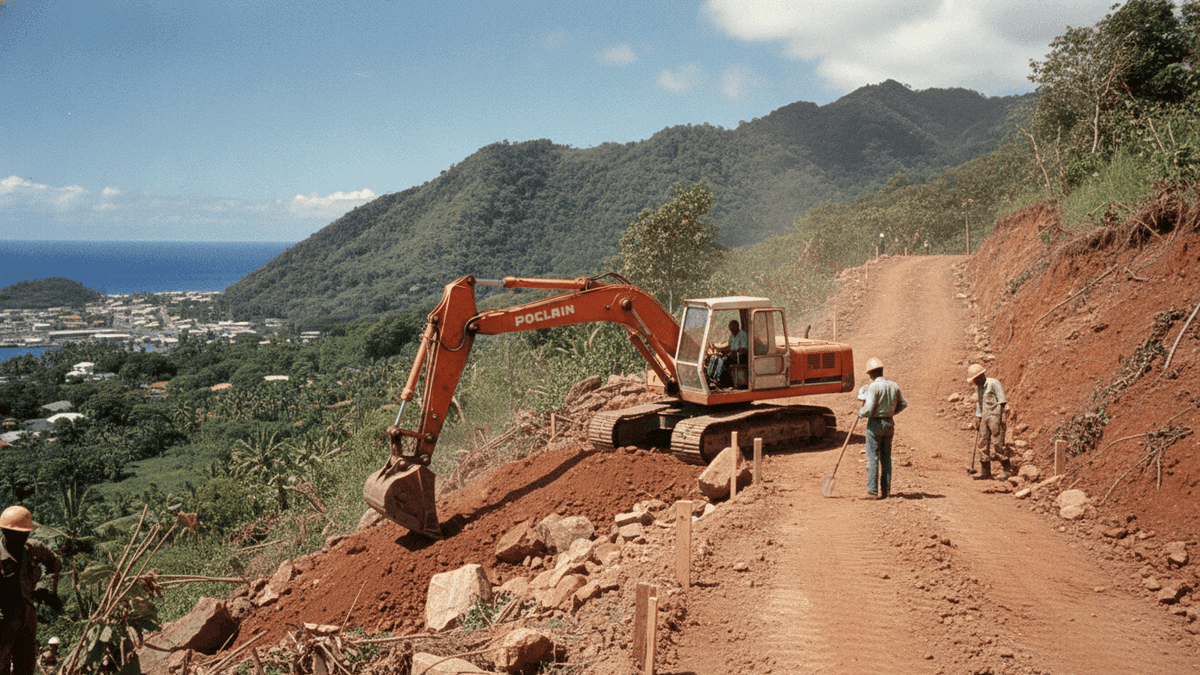
Explore the critical role of French military engineering in Polynesia, focusing on the 5th Pacific Mixed Regiment’s support for the nuclear program in 1971.
The efficacy of projecting national power, particularly in geographically distant territories, hinges significantly on the underlying logistical and engineering capabilities. A historical examination of the French Army’s presence in Polynesia during the early 1970s elucidates this principle, highlighting the pivotal role played by specialized units. Photographs from 1971, specifically featuring the Heavy Equipment Company of the 5th Pacific Mixed Regiment (5e RMP) in Papeete, Tahiti, offer a tangible illustration of the extensive infrastructure support required for strategic objectives, most notably France’s nuclear test program.
The Engineering Backbone of Strategic Projection
Established in 1963, the 5e RMP functioned as the primary engineer regiment for the French Army across Polynesia. Its foundational mandate was clear: to construct and maintain the essential facilities that underpinned France’s ambitious nuclear testing initiatives. This foundational role underscores a critical aspect of military strategy, where the physical environment must be adapted and controlled to facilitate high-stakes operations.
The Heavy Equipment Company, formally constituted in 1964, emerged as a vital component within this framework. Its operational scope encompassed critical earthworks, the development of road networks, and the meticulous maintenance of heavy machinery for all French forces stationed in Tahiti. This specialization demonstrates a strategic allocation of resources, concentrating expertise and assets where they could most directly impact the sustained operability of the broader military presence.
The 1971 Bastille Day military parade provided a public display of these capabilities, showcasing a diverse fleet of specialized vehicles. This included Clark Michigan 125 A wheel loaders for material handling, GMC CCKW trucks equipped with SPIROS air compressors for construction tasks, and Griffet AE mobile cranes for heavy lifting. The presence of Berliet TBU 15 and TBO 15 truck tractors, designed to transport bulldozers, alongside AGRIP tractors with Poclain TC45 excavators and Richier 100 road graders, collectively illustrates the comprehensive range of earth-moving and civil engineering assets deemed indispensable for maintaining operational readiness in a challenging island environment. The selection of such robust, industrial-grade equipment reflects a first-principles approach to infrastructure development, where reliability and raw capability are paramount.
Evolving Strategic Needs and Enduring Capabilities
The structural evolution of military units often mirrors shifts in strategic priorities. The 5e RMP underwent a significant reorganization in 1984, becoming the 5th Foreign Regiment (5e RE), before its deactivation in 2000. However, the enduring requirement for dedicated engineering support is underscored by its planned reactivation in Mayotte in late 2024. This cyclical pattern of deactivation and reactivation reveals a fundamental truth about military logistics: while specific missions and locations may change, the core need for specialized units capable of shaping and maintaining the physical battlespace remains a constant, adapting to new geopolitical imperatives.