EV vs Petrol: Unpacking True Financial Savings
By Sivam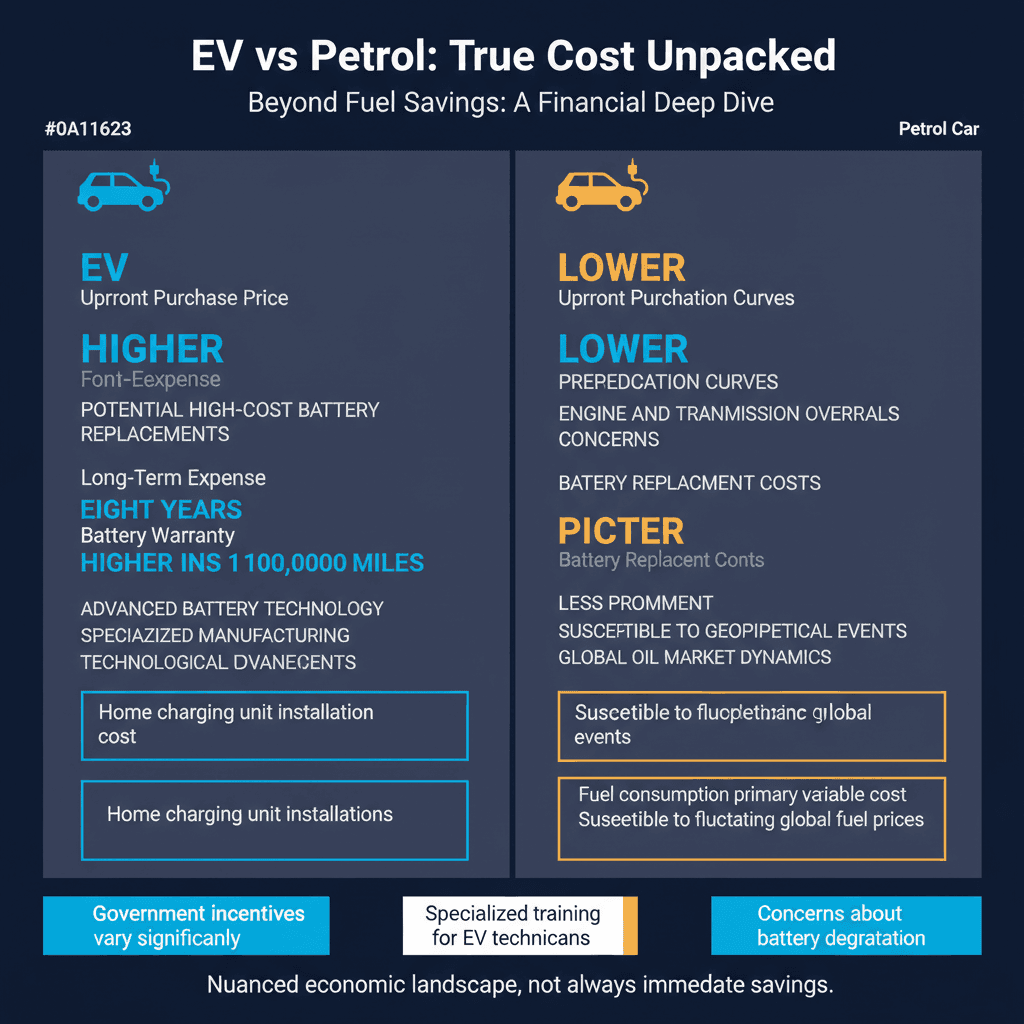
Discover the true cost of ownership for EVs vs. petrol cars. Explore savings beyond fuel, including acquisition, operational, and long-term expenses.
The prevailing discourse around automotive choices often pits electric vehicles against traditional petrol cars, with a strong narrative suggesting that EVs offer substantial financial relief, particularly amid fluctuating global fuel prices. Many consumers, influenced by the visible savings at the pump, gravitate towards the idea that an EV inherently translates to a dramatically lower total cost of ownership. However, a detailed financial scrutiny, akin to the kind of complex analysis an advanced AI like ChatGPT might provide, reveals a more nuanced economic landscape where the immediate perception of savings does not always align with the long-term financial reality. This comprehensive examination delves into the multifaceted cost implications, challenging common assumptions and offering a clearer picture of which vehicle type truly offers greater monetary advantages over its lifecycle.
The initial acquisition cost represents the first significant hurdle for many prospective EV buyers. Electric vehicles, on average, command a higher upfront purchase price compared to their petrol-powered counterparts in similar segments. This premium is largely attributed to the advanced battery technology and specialized manufacturing processes involved. While government incentives and subsidies in various regions aim to mitigate this disparity, their availability and magnitude can vary significantly, impacting the net cost to the consumer. For instance, some nations offer substantial tax breaks or direct rebates, effectively narrowing the price gap, whereas others provide minimal or no financial support, leaving the buyer to bear the full premium. This initial investment often dictates the perceived affordability and can heavily influence the total cost of ownership trajectory from the outset.
Dissecting Operational Expenses: Fuel, Charging, and Maintenance
Beyond the sticker price, operational expenses form a critical component of the total cost equation. For petrol cars, fuel consumption remains the primary variable cost, directly susceptible to geopolitical events and global oil market dynamics. In contrast, EVs rely on electricity, with charging costs varying based on local utility rates, time-of-use tariffs, and the prevalence of public charging infrastructure versus home charging. While electricity is generally cheaper per equivalent mile than petrol, the installation of a home charging unit can represent an additional upfront expense for EV owners. Furthermore, maintenance costs, often cited as lower for EVs due to fewer moving parts, require a closer look. While routine servicing might be less frequent, the potential for high-cost battery replacements or specialized EV component repairs down the line can introduce significant financial outlays that petrol car owners typically do not face in the same manner.
Insurance premiums also present a noteworthy differential. EVs, due to their higher initial value, advanced technology, and specialized repair requirements, often incur higher insurance costs. This factor, frequently overlooked in superficial comparisons, can add hundreds or even thousands to annual ownership expenses. The availability and cost of parts, coupled with the specialized training required for EV technicians, contribute to these elevated premiums. Therefore, while fuel savings are tangible, they must be weighed against these other operational expenditures to arrive at an accurate understanding of the day-to-day financial implications.
Long-Term Value and Depreciation Dynamics
The long-term financial viability of a vehicle is significantly influenced by its depreciation rate and resale value. Historically, petrol cars have followed predictable depreciation curves, allowing for relatively straightforward residual value estimations. Electric vehicles, being a newer and rapidly evolving technology, present a more complex depreciation profile. Concerns about battery degradation over time, the pace of technological advancements rendering older models less efficient, and the evolving charging standards can all impact an EV’s resale value. While some early models experienced significant depreciation, newer EVs with improved battery technology and range are beginning to stabilize their market value.
Conversely, the longevity of an EV battery is a crucial element. Most manufacturers offer substantial warranties on their battery packs, typically covering eight years or 100,000 miles. However, beyond this period, the cost of a full battery replacement can be exceptionally high, potentially impacting the decision to retain an older EV. This factor introduces a long-term financial consideration that is unique to electric vehicles and less prominent in the ownership cycle of a petrol car, where engine and transmission overhauls, while costly, are often considered within a different framework of vehicle lifespan.
The Impact of Infrastructure, Policy, and Future Projections
The broader ecosystem of charging infrastructure and government policy plays a pivotal role in the financial calculus of EV ownership. The density and reliability of public charging networks directly influence convenience and, by extension, the perceived value and practicality of an EV. Governments globally continue to invest in expanding this infrastructure, which could reduce range anxiety and foster greater adoption, indirectly influencing vehicle values. Furthermore, carbon taxes, emissions regulations, and other environmental policies can financially penalize petrol car ownership, thereby making EVs more attractive from a total cost perspective.
Looking ahead, the trajectory of both vehicle types is subject to ongoing technological innovation and market forces. Battery technology continues to advance, promising lower costs, increased range, and faster charging times, which could significantly alter the EV financial equation. Simultaneously, advancements in internal combustion engine efficiency and the potential for new synthetic fuels could prolong the economic competitiveness of petrol vehicles. Therefore, a truly comprehensive financial assessment requires a dynamic perspective, acknowledging that the monetary advantages of EVs versus petrol cars are not static but evolve with technological breakthroughs, policy shifts, and market maturation.
Conclusion: A Holistic View of Total Cost of Ownership
In conclusion, the question of whether an electric vehicle or a petrol car saves more money is not answered by a simple comparison of fuel costs alone. A holistic total cost of ownership (TCO) analysis, encompassing initial purchase price, government incentives, charging or fuel expenses, insurance, maintenance, potential battery replacement costs, and depreciation, paints a far more intricate picture. While the allure of zero tailpipe emissions and reduced daily running costs for EVs is compelling, the higher upfront investment and specific long-term considerations often mean that the financial break-even point can be further out than many consumers initially anticipate. For some, the long-term environmental benefits and evolving infrastructure may outweigh a purely financial calculation, but for those solely focused on monetary savings, a thorough, multi-faceted analysis is essential to avoid unexpected financial outcomes.