Delhi Expands Ladies Special Buses for Safer Commutes
By ThePip Desk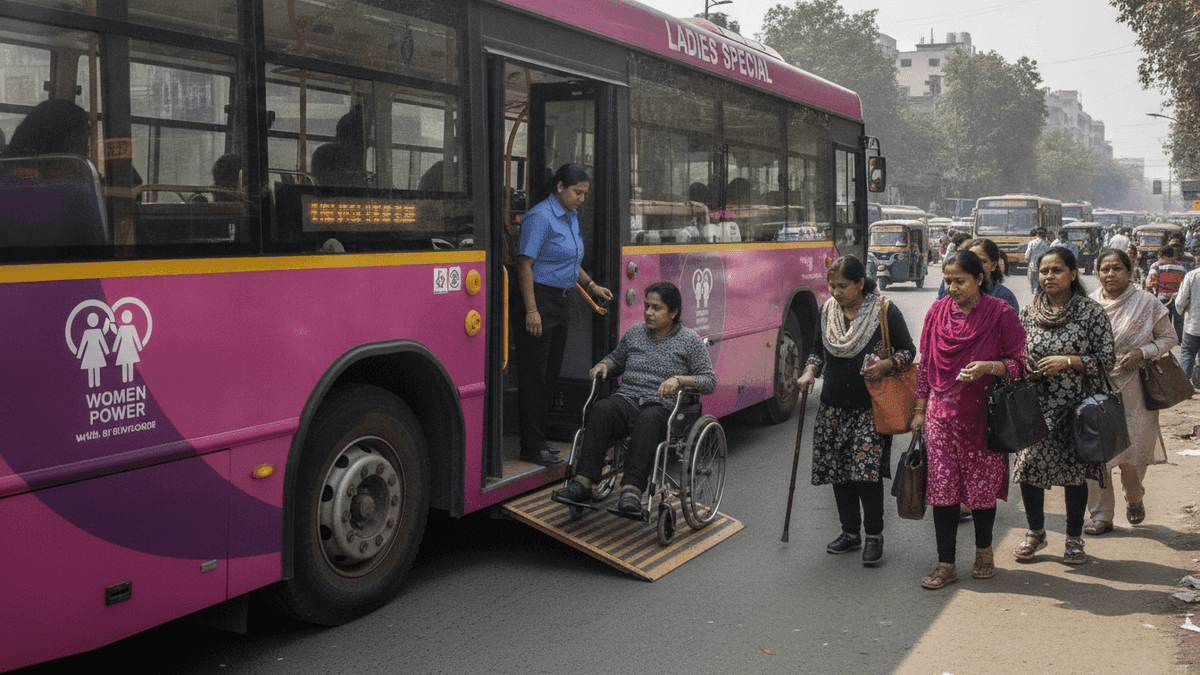
Delhi enhances women’s safety and comfort with 50 new low-floor, AC ladies special buses, including student and Outer Delhi services. A strategic move for inclusive urban transport.
The Delhi government has announced a significant expansion of its ladies special bus service, introducing approximately 50 new low-floor, air-conditioned buses. This strategic move, part of the broader PM e-Drive scheme, underscores a structural commitment to enhancing safety, comfort, and accessibility for women travelers, including those with disabilities, across the capital.
This initiative is not merely an incremental fleet addition; it represents a targeted segmentation strategy within public infrastructure. By dedicating 25 student-centric U-special buses and another 25 for Outer Delhi areas, the government is responding to specific demand patterns and safety imperatives. This approach acknowledges that universal public transport, while essential, sometimes falls short in addressing distinct social vulnerabilities and travel needs.
A critical component of this expansion involves data-driven decision-making. Officials are actively analyzing usage data from Saheli Pink Smart Cards and Pink tickets to identify routes with the highest demand for women-only services. This analytical feedback loop ensures that the deployment of these specialized resources is optimized for impact, moving beyond anecdotal evidence to informed policy execution.
The deployment of these 50 buses is integrated into a much larger vision for Delhi’s public transport infrastructure. The Delhi Transport Corporation (DTC) aims to modernize and expand its fleet to approximately 14,000 buses by the fiscal year 2028-29. The ladies special service, therefore, is a distinct, purpose-built layer within a comprehensive, multi-year investment cycle designed to overhaul urban mobility.
The Nuance of Segmentation in Urban Planning
While gender-specific services like ladies special buses address immediate safety and comfort concerns, they also invite a deeper analytical question about the long-term trajectory of urban mobility. The counter-thesis often suggests that true equity lies in making all public spaces safe and accessible for everyone, rather than segregating services. However, in contexts where systemic issues like harassment persist, targeted solutions can serve as an interim, yet vital, mechanism to ensure participation and mobility for vulnerable groups.
This policy reflects a pragmatic recognition of existing social realities, using a segmented approach to bridge current gaps. The deployment of low-floor, air-conditioned vehicles further emphasizes an inclusive design principle, directly benefiting women with disabilities by lowering entry barriers to public transport. This focus on physical accessibility, coupled with psychological comfort, is crucial for fostering greater female workforce participation and educational attainment.
The Delhi government’s expansion of the ladies special bus service illustrates a key principle in public policy: the strategic use of data to inform targeted interventions within a broader infrastructure modernization agenda. It provides a valuable case study in how urban planners are increasingly employing demand-side analytics and first-principles thinking to address complex social challenges through public service design, aiming to enhance both safety and equitable access within the urban fabric.