CNG Prices in Delhi Rise Again: Third Hike in 10 Days
By Sivam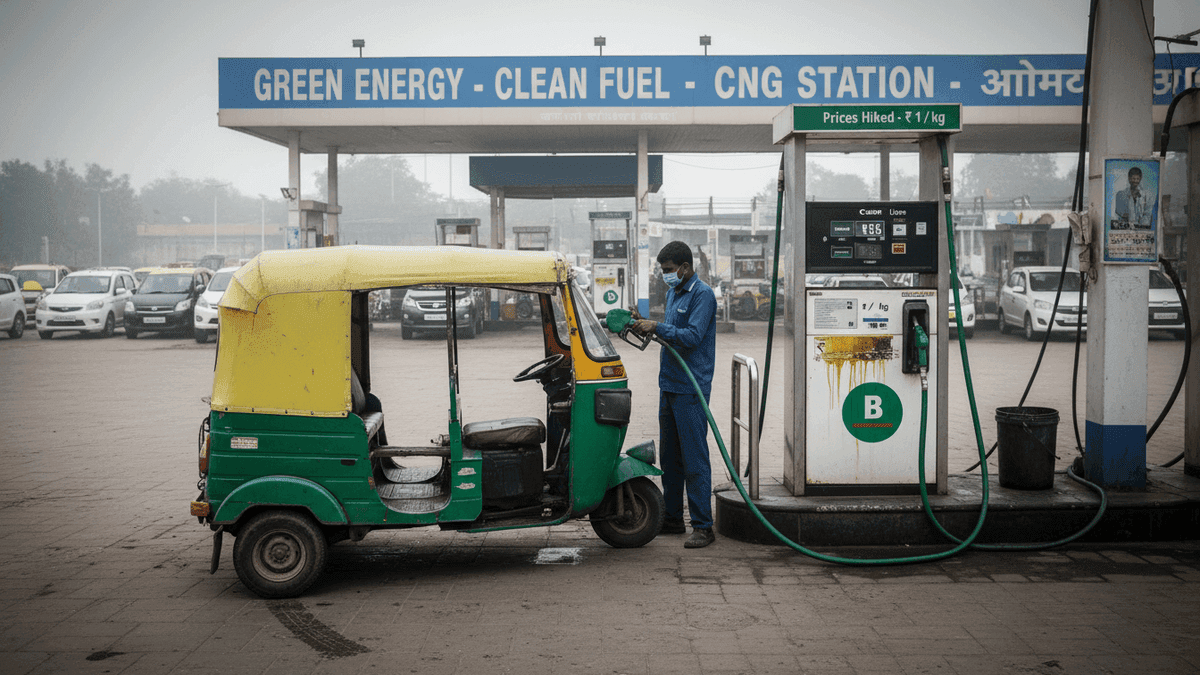
Delhi commuters face another CNG price hike of Re 1/kg, the third in 10 days. Global energy volatility impacts local fuel costs.
Consumers in Delhi are once again facing increased transportation costs as Compressed Natural Gas (CNG) prices have been hiked by another Re 1 per kilogram. This marks the third such increase within a mere ten-day period, signaling a significant financial burden on daily commuters and commercial operators. The consistent upward trend in CNG prices mirrors similar escalations observed in petrol and diesel rates, reflecting a broader inflationary pressure stemming from the global energy markets. This latest adjustment highlights the direct impact of international geopolitical events on domestic fuel economics, particularly in a metropolitan area heavily reliant on gas-powered vehicles for public and private transport.
The cumulative effect of these rapid price adjustments is poised to cascade across various sectors, influencing operational costs for public transportation, logistics, and even personal mobility. The frequent and substantial hikes underscore a challenging economic environment for households and businesses alike, necessitating a close watch on spending and operational efficiencies. As global crude oil benchmarks continue to fluctuate, driven by complex international dynamics, the domestic market remains highly susceptible to these external forces, translating directly into higher costs at the pump for millions of consumers in the National Capital Region.
Escalating Fuel Costs Impact Delhi’s Economy
The recent Re 1 increase in CNG prices per kilogram in Delhi is not an isolated incident but rather the latest in a series of adjustments that have collectively made the fuel considerably more expensive over a very short span. This third hike in just ten days follows a pattern established by similar increases in petrol and diesel prices, indicating a systemic pressure on the energy supply chain. For a city like Delhi, where CNG is a primary fuel for a substantial portion of public transport, including auto-rickshaws, taxis, and buses, as well as a growing number of private vehicles, these rapid price surges have immediate and tangible economic consequences. The operational overhead for commercial vehicles is directly impacted, potentially leading to higher fares and increased costs for goods transportation, which could eventually filter down to consumer prices.
The consistent rise in fuel prices poses a significant challenge for the economic stability of Delhi, affecting household budgets and business profitability. Small and medium enterprises, particularly those in logistics and last-mile delivery services, are disproportionately hit by such frequent cost escalations. The ripple effect extends beyond direct fuel consumption, influencing commodity prices as transportation becomes more expensive. This scenario underscores the delicate balance between global energy market dynamics and local economic resilience, with Delhi’s consumers and businesses bearing the brunt of these external pressures.
Global Geopolitical Factors Driving Price Volatility
The primary catalyst behind the recent surge in domestic fuel prices, including CNG, petrol, and diesel, can be directly attributed to significant pressures emanating from the global energy market. A critical factor in this volatile environment is the heightened geopolitical tensions in the Middle East. This region, a cornerstone of global oil production and supply, has seen increased instability, which invariably impacts the perceived risk and actual availability of crude oil on international markets. Such tensions tend to drive up the price of crude oil as traders and nations anticipate potential disruptions to supply chains, leading to a scramble for secure energy resources.
Adding to this complex scenario is the blockade of the Strait of Hormuz, a strategically vital choke point for global oil shipments. A significant portion of the world’s seaborne oil passes through this strait, making any disruption or threat of disruption a major concern for global energy security. The mere threat of a blockade or actual impediments to transit through this waterway can send international crude oil prices soaring, as the market reacts to the potential loss of vast quantities of oil supply. These interconnected global events create a domino effect, where international crude oil price increases translate almost immediately into higher costs for refined products and natural gas derivatives in markets like India, emphasizing the interconnectedness of global and local economies.
Impact on Consumers and Public Transportation
The continuous escalation in CNG prices presents a formidable challenge for millions of consumers in Delhi, particularly those who rely on public and private CNG-powered vehicles for their daily commute and livelihoods. The direct increase in fuel expenditure eats into disposable incomes, forcing households to re-evaluate their budgets and potentially cut back on other essential spending. For the vast network of auto-rickshaws, taxis, and ride-sharing services that form the backbone of Delhi’s public transportation, the higher CNG costs translate directly into increased operational expenses. While fare revisions may eventually occur, the immediate impact is often absorbed by drivers, affecting their daily earnings and overall financial stability.
Beyond individual consumers and commercial drivers, the broader economic impact is significant. Higher transportation costs contribute to inflationary pressures across various goods and services, as the cost of moving products from production sites to market increases. This can lead to a general rise in the cost of living, affecting all segments of the population. The Delhi Government and urban planners face the complex task of balancing affordable public transport with the realities of global energy pricing, while also considering the environmental benefits of CNG. The current price trajectory threatens to undermine these efforts, creating a difficult environment for sustainable urban mobility and economic growth.
Navigating Future Energy Price Volatility
The current trend of escalating CNG prices, driven by global crude oil market dynamics and geopolitical tensions, underscores the imperative for robust and adaptive energy policies. The Delhi Government, alongside central authorities, faces the ongoing challenge of mitigating the impact of international price volatility on domestic consumers and the economy. While direct control over global crude oil prices is not feasible, strategic interventions in taxation, subsidies, or alternative energy infrastructure development could provide some relief. However, such measures often come with their own set of economic and fiscal implications, requiring careful consideration and long-term planning.
Looking ahead, the outlook for energy prices remains uncertain, heavily influenced by the evolving geopolitical landscape in the Middle East and the stability of critical shipping lanes like the Strait of Hormuz. For consumers and businesses in Delhi, this implies a continued need for vigilance and adaptation to fluctuating fuel costs. Investment in energy-efficient technologies, exploring diversified energy sources, and fostering a resilient supply chain could be crucial in building a more stable energy future. The current situation serves as a stark reminder of the interconnectedness of global events and their immediate, tangible effects on local economies and the daily lives of citizens.