

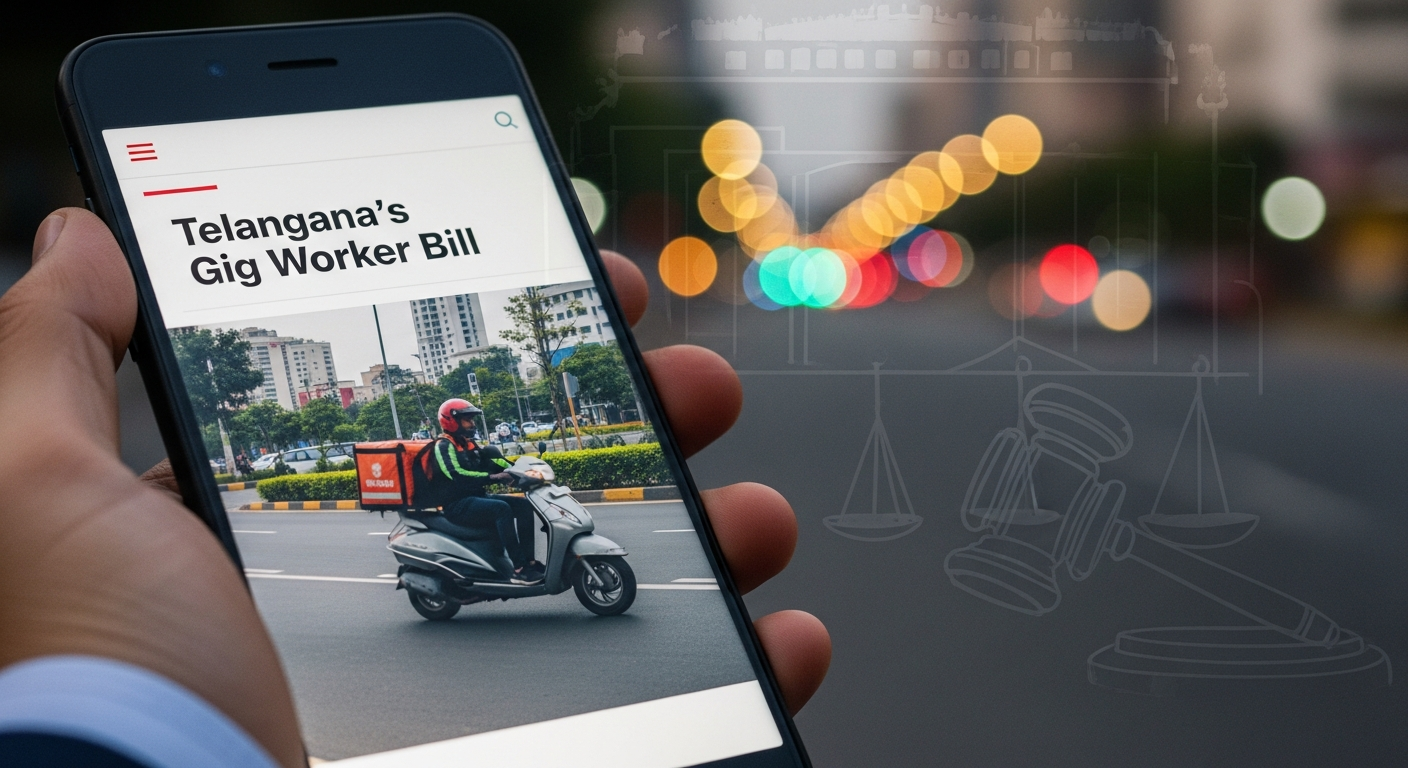







The Hyderabad sun beats down, even in late afternoon. I’m at a small tea stall near Gachibowli, the tech hub. Two delivery riders, still in their company vests, are huddled in the shade, sharing a cigarette.
They’re talking about the Telangana Gig Workers’ Bill. Released recently. The draft is out. The details, still murky. But the promise, for them, is clear: better working conditions.
What exactly does this bill propose? It aims to provide social security and establish a welfare board. It’s a direct response to the increasing precarity of gig work. The riders, like many across India, face unpredictable income, no benefits, and little recourse when things go wrong.
One of the riders, a young man named Shiva, gestures with a weary hand. He works for Swiggy. He says, “We’re always on the move. No breaks. The app decides everything.” He’s seen colleagues injured on the road, unable to work, and with no safety net.
The bill is ambitious. It covers workers across various platforms – food delivery, ride-hailing, and more. It proposes registration of gig workers and mandates contributions from both the government and the platforms. There are provisions for healthcare, accident insurance, and old-age benefits. The specifics, however, are still being worked out.
The state government, led by the Bharat Rashtra Samithi (BRS), has framed this as a landmark move. But skeptics abound. Some question the enforceability. Others worry about the financial burden on platforms and the potential impact on jobs.
A senior policy analyst at the Centre for Public Policy, Dr. Priya Sharma, notes, “The intent is laudable. But the devil is in the details. Implementation will be key.” She stresses the need for clear definitions and effective mechanisms to ensure compliance. She also points out that similar efforts in other states have faced hurdles in the past.
The gig economy is booming in Telangana. Thousands depend on it for their livelihoods. The bill is a response to this reality. It’s a recognition of the need to protect this vulnerable workforce. But will it translate into real change? The tea stall cools down as the sun dips. The riders finish their tea and head back into the traffic. The answer, as always, is in the doing.