

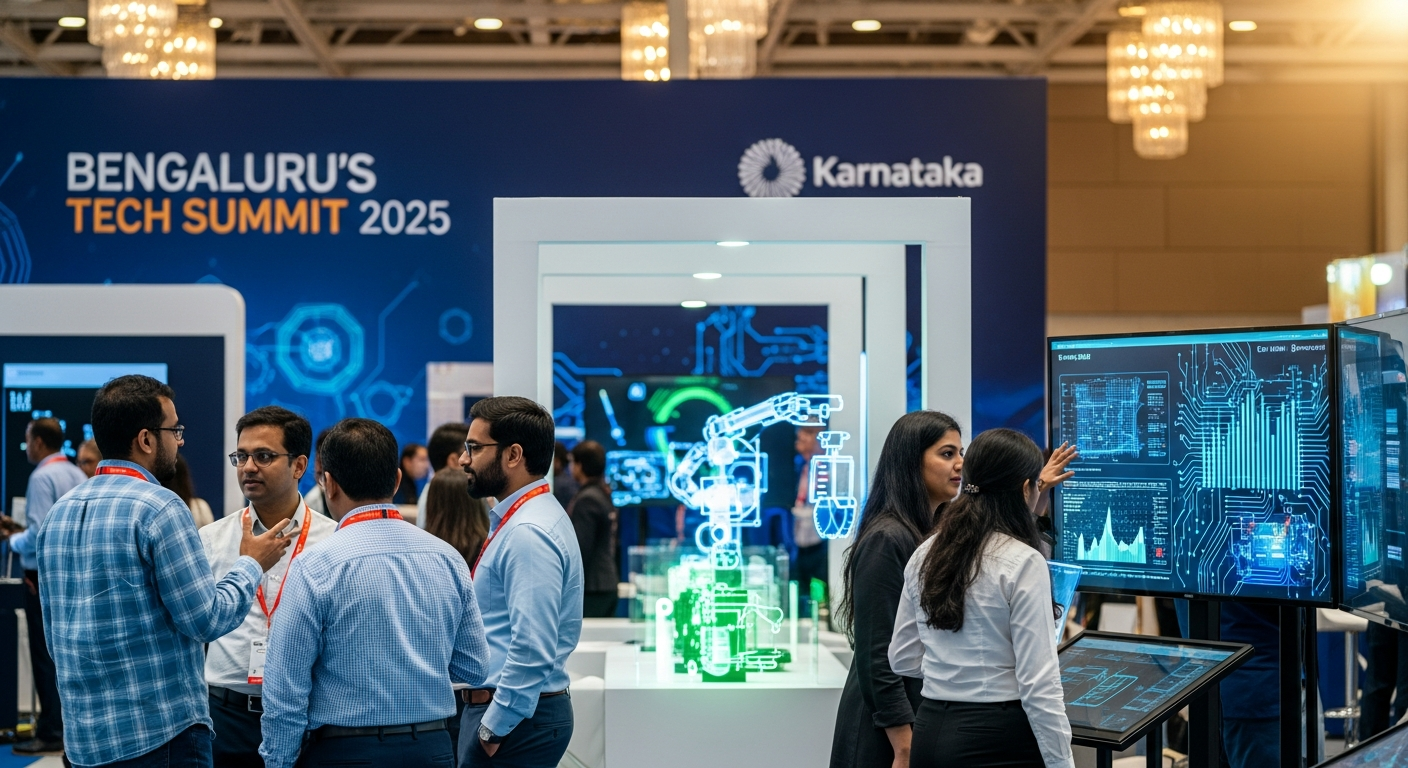







The air in Bengaluru crackled with a certain electricity during the second day of the 2025 Tech Summit. It wasn’t just the usual buzz of networking and deal-making. There was a palpable shift, a sense that something new was being born. Karnataka, the state that built India’s software behemoth, was signaling a change.
The focus? Deeptech. Not just another buzzword, but a strategic pivot. The state, which has long been synonymous with IT services, is now betting big on areas like AI, quantum computing, and biotech. It’s a move that feels both necessary and inevitable, a natural evolution for a region that has always been at the forefront of India’s technological ambitions.
Walking through the exhibition halls, the difference was stark. While familiar faces from the IT services world were present, they were now sharing space with startups developing brain-computer interfaces, companies working on sustainable energy solutions, and researchers pushing the boundaries of genetic engineering. The energy was different, more intense, more focused on the future. One could feel the shift.
“We are not abandoning our roots,” explained Minister for IT, BT, and S&T, Priya Sharma, during a panel discussion. “But we recognize that the next wave of growth will come from these deep technologies. We are creating the ecosystem to support it.” Her words, delivered with a quiet confidence, hung in the air, a promise of sorts.
The summit itself was a testament to this shift. Numerous workshops and seminars were dedicated to deeptech topics. Investors from around the world were in attendance, their eyes scanning for the next big thing. The state government announced a series of new initiatives designed to support deeptech startups, including funding programs and incubation centers. These were not mere announcements; they were the building blocks of a new reality.
It’s a long game, of course. Deeptech is not a quick win. It requires patience, investment, and a willingness to embrace risk. But as I watched the attendees, their faces illuminated by screens displaying complex algorithms and intricate designs, I couldn’t help but feel a sense of optimism. The future, it seemed, was already taking shape.